Maranchino biscuits

Food & drink
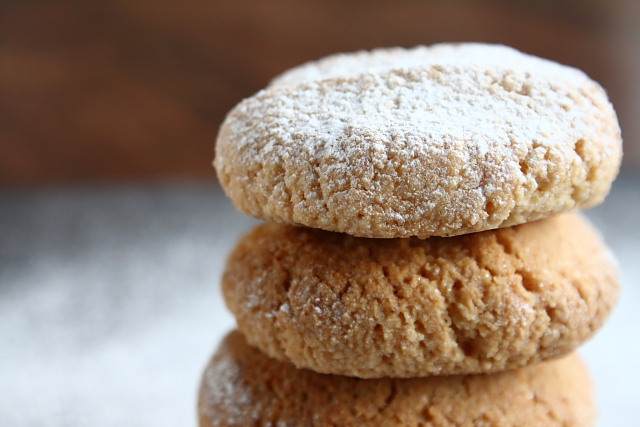
Claudia Roden’s Maranchino Biscuits

Excellent with coffee, these little almond biscuits from Turkey and the Balkans are quick and easy to make.

Mix 400g of ground almonds and 150g of golden caster sugar together and add two or three drops of almond essence and two tablespoons of rose water.

Bind the ingredients together with two lightly beaten eggs, and work until the dough is smooth.

Roll walnut sized balls of dough, place on a greased baking tray and flatten slightly with your fingers.  You should get about thirty biscuits.

Bake at 180c for twenty-five minutes, but keep an eye out to prevent the edges from burning.

This recipe is from Claudia Roden’s The Book of Jewish Food.

A fascinating and authoritative glimpse into the untold culinary riches of the Jewish world, this is a serious and important book, with some stunning recipes.  Roden understands the collision of food and culture perfectly and shows clearly how each make the other.

The St Pancras Grand Restaurant, Oyster and Champagne Bar, London

Eating out
The St Pancras Grand Restaurant, Oyster and Champagne Bar, London
“Beyond the throb of the engines is the throbbing heart of all.”
John Betjemen

St. Pancras station in London is quite the most amazing space, a vast vaulted ceiling headed by a gold clock, set high above a fleet of sleek Eurostar trains.

The station dodged the Luftwaffe’s bombs, but fell out of favour during the Sixties rush to sleek modernism.  Somehow, it survived, a dirty and half derelict relic from another age.

Then came the Eurostar.

The Victorian soot was sandblasted off the red bricks, the ceiling repaired and re-architected, the lower concourse – once a store for Northern beer barrels as they arrived in the capital – renovated as a retail space and international departure lounge.

St. Pancras captured the old, lost romance of the railway, and was reborn.

The upper concourse has an oyster and champagne bar, part of a larger restaurant.  Travellers sit with their bags and their stories sipping champagne as John Betjeman, poet laureate and St Pancras’ champion in its darkest days, immortalised in bronze, gazes shambolically skywards, astounded by the grandeur and scale of the roof.

The St. Pancras Grand serves a solidly British menu, as if to challenge the French people disembarking from the train at their own game.

Kidneys sauteed in butter and served on toast with a red wine reduction.  Kedgeree, with smoked haddock, egg and fresh peas, the rice retaining its bite, flavoured with the mellow whiff of the Empire – a bowl of warming, satisfying food, loaded with history.  Blackberry and apple crumble, as essentially English as any pudding could ever be,  with ice-cream, flecked with black specks of vanilla, melting slowly into the big, rustic crumb topping.  A glass of champagne at the side, an excellent ximenez sherry later.

Fitting, accomplished and well cooked food.

Betjeman would have been amazed and delighted at what’s become of his favourite station.

Photo courtesy of Richard Gunn.  Many thanks for graciously allowing me to use it. See more of Richard’s excellent shots in his Flickr photostream.

St Pancras Grand on Urbanspoon

Duck prosciutto – the simple art of making your own ham

Food & drink
How to make duck ham

Salt gets a bad press.

I know it’s responsible for the untold misery of heart disease, high blood pressure and a thousand other fairly major medical complaints, but it also has a near mythical ability to preserve food and concentrate flavour, the closest thing to culinary alchemy there is.

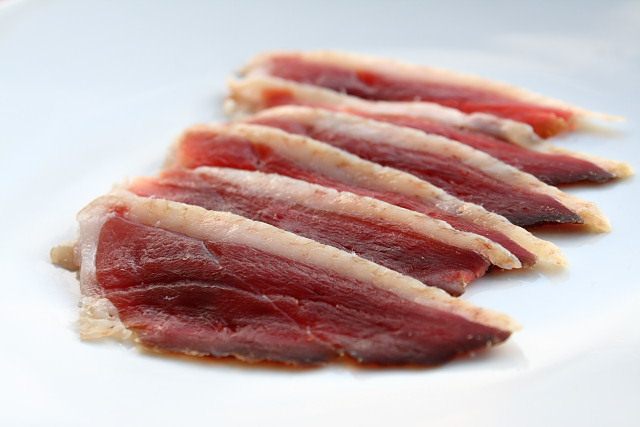
This duck prosciutto, a ham born through nothing more than the application of salt to a duck breast, is simplicity itself, and at no more than five minutes work, spread over a few days, it’s a great introduction to the magical world of charcuterie.

First, make a basic curing mixture of 300g of rough sea salt and 300g of golden caster sugar.

Add a small handful of rosemary leaves, bashed up and bruised a little in a pestle and mortar, or just chopped through on a board, along with three or four crushed juniper berries and three peeled and squashed cloves of garlic.

Crush half a teaspoon of coriander seeds, a single clove, half a teaspoon of black peppercorns and a star anise together in the pestle and mortar and stir into the salt and sugar mix.

Sprinkle the cure over two plump duck breasts in a non-reactive bowl.  A plastic box is best, small enough to contain the duck breasts neatly.  Put the box in the fridge and leave for three days.

The salt will work it’s magic, drawing out the duck’s moisture and gently drying it out.  The cure will turn to a brine, and the meat will darken.

After three days, rinse the breasts under cold running water and pat dry on a tea towel before individually  wrapping and tying them in muslin.  Hang the duck in a cool, airy place for a week to dry – a dry cellar or a shed or garage would be ideal.

To serve, slice the ham at an angle, as thinly as possible.

The ham tastes delicate and mellow, sweet and not at all salty.  There are hints of juniper and rosemary.

This recipe is from Trish Hilferty and Tom Norrington-Davies’ wonderful Game: A Cookery Book.

Farleigh Wallop and Little Wallop – more of Alex James’ cheese

Food & drink
Farleigh Wallop and Little Wallop – Alex James’ cheese

The blue cheese I tried a couple of weeks ago was sensational, so I thought some more of Alex James’ cheeses might be worth a look.

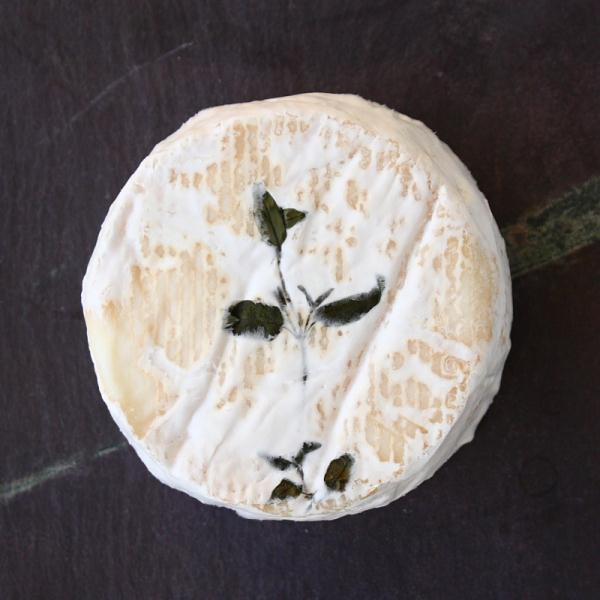
Farleigh Wallop and Little Wallop are both goat cheeses, made in complete 115g rounds.  They’re not cheap, at £6.99 each, but you get a lot of flavour for your seven quid.

Farleigh Wallop Alex James

Farleigh Wallop tastes clean and fresh, with the slightest hint of thyme from the sprig pressed into the top.  It’s slightly firm and quite delicate and subtle.  It was voted Best Goat Cheese at the 2008 British Cheese Award, and it’s easy to see why.

Little Wallop is a different beast entirely.  Bigger and gutsier, it’s another goat’s milk cheese, this time washed with Somerset cider brandy and wrapped in vine leaves.  The brandy leaves a lingering, nutty taste and the cheese is softer and more pliable than it’s cousin. It’s a gorgeous cheese.

Both Farleigh Wallop and Little Wallop, along with the brilliant Blue Monday are available from Matt at Coxon’s Kitchen in Saltaire.  Thanks to Matt for putting these aside for me.

Farleigh Wallop Alex James

Credit for this photo goes to Lara, aged three.  This is her first attempt at food photography, and I think she shows promise

Saag Murgh, or chicken and spinach curry

Food & drink
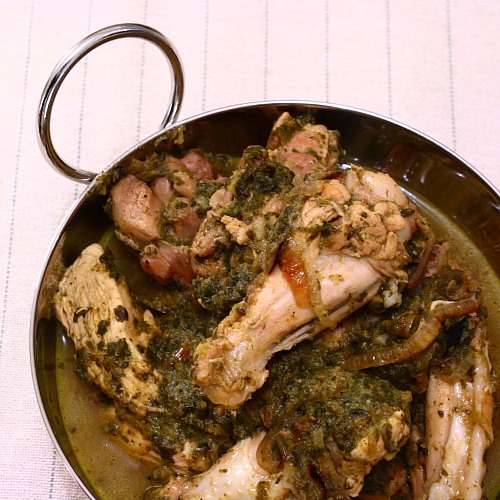
Saag Murgh, or chicken and spinach curry Madhur Jaffrey

Most of the food you’ll find in a standard Indian restaurant or takeaway is from the North of the subcontinent, from the deserts of Rajasthan, the hills of Kashmir and the densely populated towns and cities of Uttar Pradesh.  Yet more has its roots in Pakistan.

This chicken and spinach curry comes from the Punjab, an area that straddles the India – Pakistan border.  Frequent invasion and occupation by the likes of the British, the Greeks, Mughals, Persians and Turks has left its mark on the region, and vice-versa. Anglo-Indian staples like the tandoor, naan bread, pakoora and dishes cooked with paneer all trace their roots back to the heart of the region.

Start by skinning and jointing a chicken, cutting it into serving pieces.  To do this, cut the skin away and remove the legs, wings and breasts.  Cut the breast meat into four big chunks, and with a heavy knife or a pair of sturdy scissors, cut the leg and thighs into two pieces, right through the bone.  If you’ve got a cleaver, now may be the time to get it out.

Be careful of the blade – don’t use any expensive German or Japanese steel for this.

Next, make some crispy fried onions by cooking three small onions in vegetable oil over a high heat until they’re brown and crispy.  The idea here is to shallow fry the onions in a fairly hefty amount of oil, so that they darken and crisp well before draining them on kitchen paper.  The onions will be sweet and crunchy.

Cook about 300g of fresh or frozen spinach until wilted.  If using fresh spinach, wash it then cook it in a large pan over a low heat.  The water clinging to the leaves will be enough to help the spinach wilt.  For frozen spinach, just melt it gently in a pan.

When the spinach is cooked, drain it thoroughly, let it cool for a while and then chop it finely.

Spinach is a vegetable that freezes very well indeed, and there’s no shame in using the frozen variety in a stewed dish like this.  It’s a worthy cheat.

Next, blend two small chopped onions, a two-inch piece of peeled ginger, four cloves of garlic and a good splash of water together in a food processor or blender to make a thick paste.

Now, the cooking.

Heat a glug of vegetable oil in a large pan and add five whole cardamom pods and a stick of cinnamon.  Let the spices sizzle for a minute, then add the onion paste, frying for about five minutes, stirring all the time.

The onion paste will brown and darken.  Add two teaspoons of ground coriander and one teaspoon of ground cumin, along with half a teaspoon of cayenne pepper, more if you want.

Add the chicken pieces and stir them around, letting the chicken brown, for about five minutes before gradually adding six large tablespoons of plain yoghurt, a tablespoon at a time, stirring all the time.

Next, add two peeled and chopped tomatoes and the chopped spinach.

Top up the pan with about 300ml of water, add two teaspoons of salt and the crispy fried onions and leave to cook gently for twenty-five minutes.

The fried onions will melt into the curry, adding a sweet and earthy note.  The chicken will be soft and tender, the bones adding a depth of flavour to the dish.  The heat of the cayenne is balanced by the coolness of the yoghurt and the body of the spinach.

Easy, quick and delicious, even better the day after.

This recipe is from Madhur Jaffrey’s Ultimate Curry Bible.  There are plenty of other versions out there, but, to my mind, Jaffrey’s is the best.