PIN, Leeds

Eating out
PIN Dock Street Leeds

Leeds Brewery have been quietly expanding in Leeds over the last few years.

They’ve now got four pubs and bars, each with a distinct identity and reason. PIN is their ‘contemporary cafe bar’, a small bar and restaurant tucked away on Dock Street, just over the river.

Given that PIN is a Leeds Brewery bar, it almost goes without saying that they’ve got Leeds Best and Pale on tap, and very good they are too. The cocktail list is long and impressive, but it’s great to see a couple of pumps full of proper beer right at the front. It shows that the place has a bit of heart and soul.

The food is very good. There’s nothing that unusual or exotic on the menu, but it’s all good, relaxed and comfortable food, the sort of food that, if you’re honest, you probably really like to eat.

We had some skewers or jerk chicken and some deep fried brie to start. The chicken had a good kick to it and was very tender, and the other starter was a chunk of breaded and deep fried cheese, so, really, what’s not to like?
More PIN here…

Thai Street Food, by David Thompson

Books
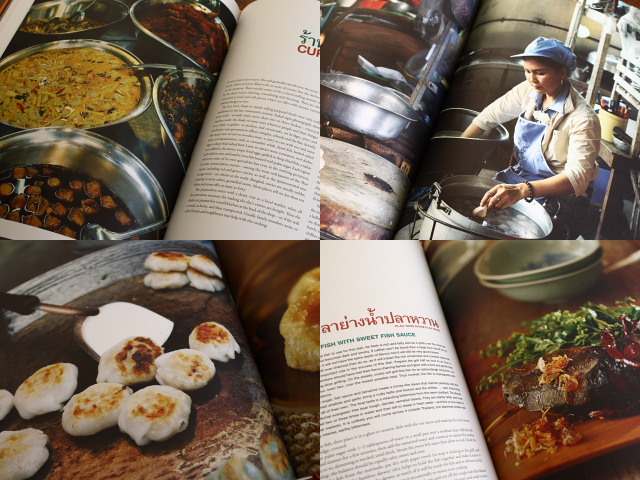
David Thompson’s Thai Street Food

When you think about the types of food that have strong associations with a particular place or country, what do you think of?  British fish and chips, maybe, or American hotdogs? What about French crepes or Belgian waffles, Spanish churros or an Italian espresso?

There’s a subtle theme here…these are all fast foods, street foods, food that you eat as a snack or an impromptu meal.  Often, it’s these accessible and very available foods that leave the biggest impression on the visitor and come to form such a strong part of a place or country’s identity and fabric.

This food, as insignificant as it may seem, is the heart and soul of many a place.

In South East Asia, the connection between quick street food and identity is even stronger. Somewhere like Thailand seems to run fuelled on noodle soups slurped from bowls served from rickety carts on every street corner. I really get the feeling that a city like Bangkok would just grind to a halt if the street vendors went on strike, which of course, they never would.  During this year’s pro-democracy protests in Bangkok, the only people allowed to move freely between the different factions and the police and military were noodle vendors pushing their carts.

It’s this brand of Thai cooking – quick, ingenious, traditional street food – that David Thompson takes as the subject of his new book, Thai Street Food, following up the monumental Thai Food.

Thompson has some pedigree in this area, having opened the first and only Thai restaurant to win a Michelin star in London in 2001.  Earlier this year, he made the audacious move of opening a restaurant in Bangkok.  This isn’t as big a gamble as it seems – Thompson is widely known and respected in the Thai restaurant business as a world-leading expert in the field.  If anybody can cook Thai food to the satisfaction of the Thai people themselves, Thompson can.

[continue reading…]

Jamie Oliver’s five knife set and block

Kitchen gear
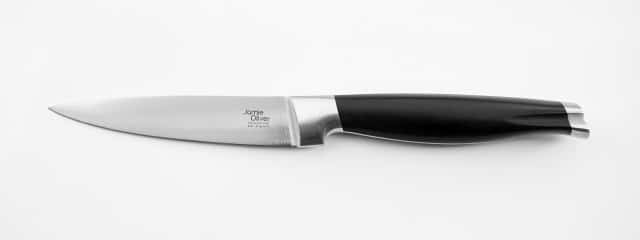
Jamie Oliver knife block and five knife set

I’m not one to be swayed by a celebrity endorsement, especially one that’s attached to a piece of kitchen equipment.

Apart from my trusty Ken Hom wok (his signature is on the handle!), I don’t think I own another piece of celebrity kitchen junk.

No George Foreman Grill with bun warmer (‘bun warmer’? What the hell?), no Anthony Worrall Thompson branded electric knife, no James Martin digital steamer.

Nothing.

This meant that I was a little wary when offered the chance to have a look at some of Jamie Oliver’s latest range.

Would any of it be worthy of a place in my kitchen or would it all end up in the basement with the rest of those forgotten kitchen gadgets that seemed like a good idea at the time?

First up was a handsome looking beech knife block and a set of five knives.

I’m very particular about knives.

OK, ‘particular’ isn’t the word for it…’downright militant’ might be a better description. If a knife isn’t German, or for that matter, made by Wusthof, it won’t be on my knife rack. You may see this as fussy, elitist or snobbish, even, but Wusthof make the best knives in the world, and that’s a completely unsubstantiated fact.

So, Jamie’s knives had a lot to live up to.

[continue reading…]

See-Pyan, or Burmese chicken curry

Food & drink
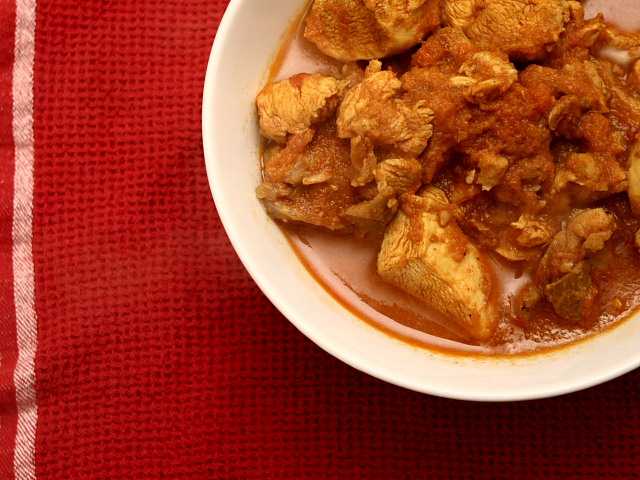
Madhur Jaffrey’s See-Pyan, or Burmese chicken curry, an exciting collision of Indian and southeast Asian flavours.

There are a lot of different types of curry out there, but I tend to stick to the Indian or Pakistani varieties, with maybe the odd Thai green curry every now and again.  To me, the Indian sub-continent is the spiritual home of the curry, but that doesn’t mean that other regions don’t make astonishingly good curries. This is one of them.

It’s from Myanmar, as Burma is now known, which sits on the Bay of Bengal, wedged between India to the west and Thailand to the east.

The distinctive food cultures of it’s neighbours is reflected strongly in a lot of Burma’s cuisine, and this curry is a great example of exactly how – Indian spices mix easily with the more southeast Asian flavours of lemongrass and fish sauce.

Start by marinading some skinned chicken, chopped up into small, bit sized pieces in two teaspoons of hot curry powder, half a teaspoon of garam masala and one and a quarter teaspoons of salt.  Work the spices into the chicken well, cover and refrigerate for an hour or so to let the flavours penetrate into the meat.

Meanwhile, blend an inch of peeled ginger, three cloves of garlic and two medium onions in a blender with a splash of water until you’ve got a smooth paste.  Add half a teaspoon of cayenne pepper and two teaspoons of bright red paprika to the blender and mix them in.

Read more….

Domenico DeMarco, the “Godfather of Brooklyn pizza”

Food politics

The Best Thing I Ever Done HQ from MargaretEmily MacKenzie on Vimeo.

“When I make dough, see, I don’t measure with a scale the yeast, nothing.

It’s because I have the confidence in myself, you see.

I trust my hands, I trust my eye.

It’s good dough when you see little holes, yes?

When you make dough, see, when you put your hands in the dough, then the dough is good.

I think I dedicated my life to this. It’s all I want to do, you know?

You must love what you do. If you no love what you do, no do it”.