Boxing Day turkey sandwiches, or how to dent the turkey mountain

Food & drink
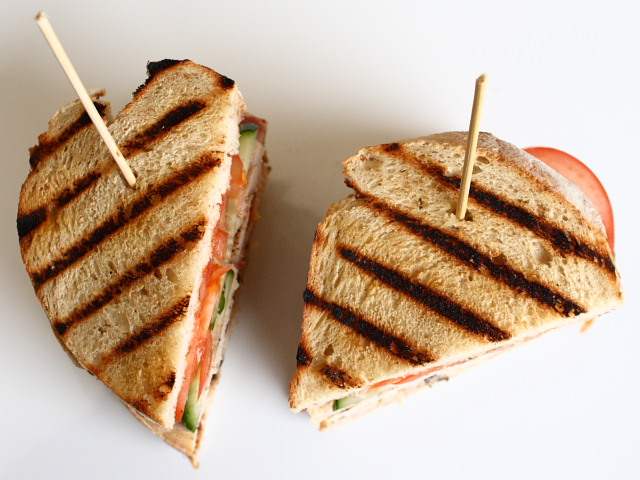
Leftover Christmas turkey sandwiches

Cooking a turkey on Christmas Day is a faintly ridiculous idea.

If you take an average bird of, say, 6kg in weight, you can comfortably feed at least a dozen people and probably an awful lot more than that. A bird of such colossal size pushes the physical limits of a lot of smaller domestic ovens and tests the nerve of many amateur cooks, terrified of serving salmonella pink turkey to their families.

Turkey is thought by many to be fraught with difficulty, even if its reputation is unjustified (cooking turkey is actually easy – it’s just a matter of not overdoing it and letting it rest and relax for a decent period of time once its out of the oven, but more on that next year…).

But Christmas dinner is supposed to be a feast, which is why a turkey leads the small pack of centrepieces traditionally suitable for serving on Christmas Day.

The sheer size of the average turkey means that there’s bound to be some left, and the annual challenge of using up the rest of the bird has borne some traditions of its own, and my favourite amongst these is the Boxing Day turkey sandwich.

I look forward to Boxing Day lunch nearly as much as I look forward to Christmas Dinner itself, and in many ways, the Boxing Day turkey sandwich is a more satisfying meal, especially if you’ve spent the previous day juggling pots and pans, bringing a huge meal to the table at the right time and at the right temperature.  The turkey sandwich is stripped of all the fanfare and drama of the main event, but it’s as much a part of Christmas as anything else.

I take my Boxing Day turkey sandwich extremely seriously, and this year, I decided to bake some bread especially for it on Christmas Day evening.  Now there’s dedication…
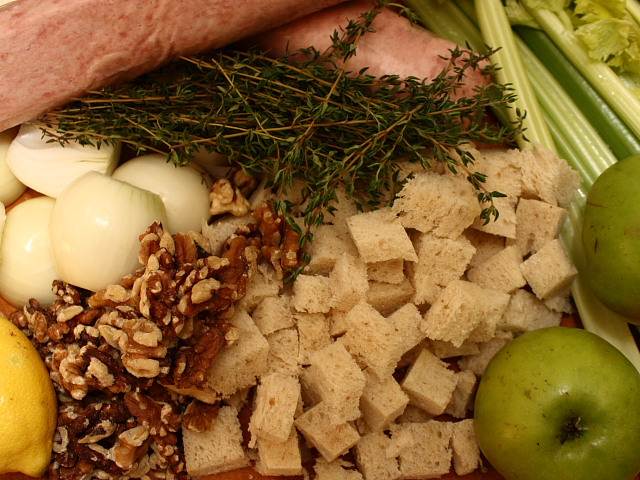
Read the turkey sandwich rules below…

American turkey stuffing

Food & drink
Delia Smith’s Christmas American turkey stuffing

It’s getting close to Christmas now, and it’s about this sort of time that I start to panic about stupid things like deciding which type of stuffing to make.

I’ll spend an hour or so scattering cookbooks around the dining room, looking for something new and different to cook on the stuffing front.  There’ll be another hour spent searching the almighty Internet for the same thing.

Eventually, there’ll be one book left on the table.

Delia Smith’s Christmas.

It’ll be open at the page with the American turkey stuffing recipe, and I’ll succumb to the inevitable and start to cook it.

Just like every year.

Delia’s recipe is very easy.  All you need is a frying pan to brown some of the ingredients and a big bowl for mashing everything together.

More this way….

Mixing up nitrites and nitrates

Food politics
Mixing up sodium nitrite and sodium nitrate

A few weeks ago, I made some pancetta – cured bacon that was then rolled, tied and dried for three weeks to mature it.

Some time later, this comment was posted:

I really think you should research what prauge (sic) powder#1 and prauge (sic) powder#2 are used for before you end up making alot of people sick! If you are dry curing then you sure as hell better be using prauge (sic) powder #2 and not prauge (sic) powder #1

The commenter highlighted something that I’d been very worried about – the use of chemicals in the curing purpose, and more specifically, using the right chemicals at the right time.

Charcuterie and curing can be a bewildering subject to get into, with ingredients that look more at home in a lab than a kitchen and specific and hard to achieve requirements around temperature and humidity.

It’s all a bit overwhelming, really.

What’s the difference between sodium nitrite and sodium nitrate?

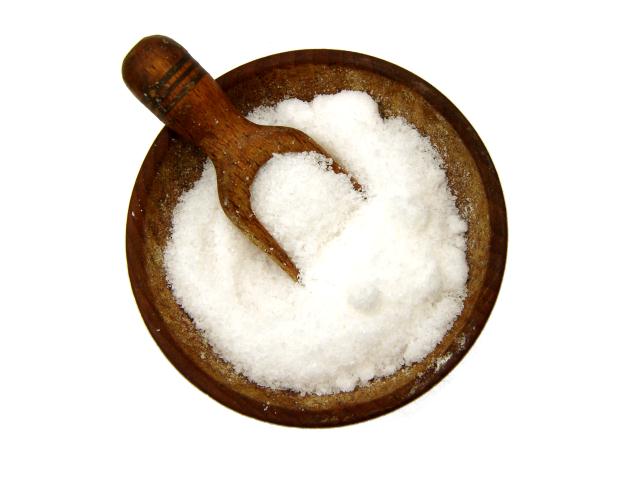
Sodium nitrite is sold under a lot of different names, but the main brands are Prague Powder #1 or Instacure #1.  Sodium nitrate is normally sold as Prague Powder #2 or Instacure #2.

This is where things get a little tricky…

Sodium nitrite and sodium nitrate do the same thing in the end, but in different ways, although sometimes, they’re used together.

In general, sodium nitrite is used alone where the finished product will be cooked through before eating, where the drying or maturing process is only a couple of weeks.  My pancetta falls firmly into this category.

Sodium nitrate is normally used where the end result is a fully dried product, like a salami or dried sausage of some sort.  The meat is still technically raw when its eaten – its never been heated right through.

To understand why nitrates are used for fully dried products, it’s important to understand why they’re different to nitrites.

[continue reading…]

Brewdog’s Tokyo Imperial stout

Food & drink
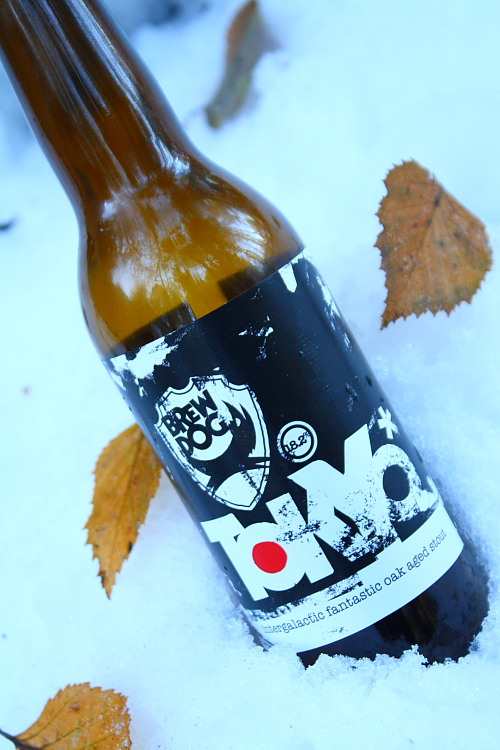
Brewdog’s Tokyo – 18.2% of pure Scottish brilliance

I’ve had a bottle of Brewdog’s Tokyo knocking around for a while now, and I must admit that I’ve been a little nervous about opening it.

I like a strong beer, but 18.2%?

That’s not strong.

That’s insane.

When Tokyo was first launched a while ago, it led to a storm in a teacup about responsible drinking and the culpability of brewers in the creation of ‘Binge Britain’.  In truth, an artisan beer like this,  sold in 330ml bottles at a very premium price is not the type of product that leads to brawling in the street.

This is Brewdog’s way, though…it’s all part of their marketing strategy.  Since Tokyo, they’ve produced a couple of even stronger beers, culminating in a ludicrous IPA called Sink the Bismark, which weighs in at a mighty 41% ABV.

More this way…

Momofuku, by David Chang and Peter Meehan

Books
David Chang’s fusion masterpiece, Momofuku

There are things we say in the kitchen, a codified lexicon, that explain some of the kitchen mentality at Ko. “Make it soigne” means make it right and make it perfect.

It’s something you hear a lot in traditional French kitchens.  No mistakes, no misunderstandings. Make it the best.

Do not fuck it up.

It’s a simple thing.

“Make it right”.

Just do it properly. But any cook will tell you that the apparently simplest things can often turn out to be the hardest to accomplish well.

Ever burnt toast?

This simple mantra – “make it right” – underpins much of David Chang’s approach to his breathtaking food, a collision of Korean cuisine with Western standards that’s as inventive and creative as it is audacious.

Momofuku is something that’s difficult to define.  It’s a concept that’s grown out of a noodle bar in New York’s East Village into a small chain of highly regarded restaurants that remain casual and unusual despite their success.  New York Times restaurant critic Peter Meehan calls Momofuku “the anti-restaurant” in his introduction to Momofuku – so many things are at once wrong and right, bucking again prevailing expectations of what a restaurant should be.

This book is Chang’s first attempt to distill the ethos of his restaurant onto the printed page.

And is it good?  Yes, it’s good.  Breathtaking, absorbing, inspiring. Good.

Momofuku is a glimpse behind the door of Chang’s kitchen.  Many cookbooks claim to deliver this, to draw the reader and the home cook into a different culinary world, but few succeed as resoundingly as Chang does here.  I often read cookbooks that are technically good, brilliant, even, but which leave me cold.  They do nothing for me.  They prompt me to think about what I’m going to cook from them, to make little lists of obscure ingredients, to get on the train to Leeds with the sole aim of raiding the shelves at Wing Lee Hong.

They don’t inspire me in the way that this one does.

More this way…