Hugh’s Fish Fight friendly mackerel bap

Food & drink, Food politics
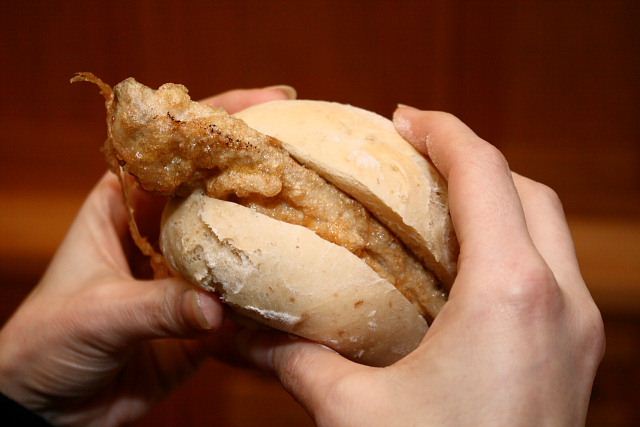
Hugh Fearnley Whittingstall’s mackerel mission … the MakBap

As part of his Fish Fight, Hugh Fearnley-Whittingstall is encouraging us to eat a more diverse range of fish, and there’s one cheap, sustainable, nutritious and extremely tasty species right at the front of the pack.

Mackerel.

Criminally under-valued, mackerel is nothing short of a show-stopper.

Packed with all the right types of fish oil and minerals, it’s plentiful in British waters, easy to catch and it’s quality belies the meager price you’ll pay for it.

Hugh’s big idea is to get mackerel on the menu at the local fish and chip shop, next to cod and haddock.  Maybe it could just supplant the major disappointment that is plaice or the abomination of the battered sausage?

In the affection of the chip shop frequenting British public (that’s all of us, non-Brits), cod and haddock reign supreme, with only minor regional swings between the two giants of the white fish world.

In West Yorkshire, it’s haddock all the way, skinned, please.

This might be Hugh’s biggest problem.  When we think of fish and chips, we think of a big piece of white fish.  Anything else, and I feel cheated.

But setting that aside, what about mackerel?

Could it work?

Recipe follows…

Why are perfectly good fish thrown back into the sea, dead?

Food politics

There’s something wrong with fishing in Europe.

The thing is, over half of the fish caught in the North Sea end up being thrown back overboard, dead, the victim of a set of insane regulations intended to protect European fishery stocks, but which instead serve to decimate them.

The basic thrust is that fishermen are given a certain quota of fish for each commercial species. They can fish for their quota, and land what they catch, but once the quota is filled, that’s it.

No more fish of that species can be landed.

The problem is that the North Sea is a mixed fishery, and fishermen can’t help which type of fish they catch. They may want haddock, but if they catch cod, for example, in addition to haddock, the cod can’t be landed if their quota of cod has already been caught and the only legal and realistic option is for the cod to be discarded at sea.

Perfectly good fish – some of the best fish in the world, fresh, healthy, valuable – end up overboard, disposed of as ‘discard’ or ‘by catch’.

[continue reading…]

How to bake bread

Food & drink
Baking bread at home

A lot of people are scared of baking their own bread.

There’s a lot of misconceptions out there:

  • It takes too long – not true.  A very decent soda bread can be made in under an hour, start to finish.  Granted, a proper loaf needs time for the yeast to work it’s magic, but even though the elapsed time needed to make bread may be several hours, it’s only punctuated by very brief interventions – a minute or two to punch the rising dough down, or shape the loaves…
  • It’s too difficult – quite the opposite, baking bread is very easy.  It takes a little time to understand the concepts, but the methods are so simple that, after a few attempts, you’ll be knocking out a batch of vastly superior loaves without a recipe.
  • My breadmaker takes all the strain, so why bother doing it by hand – breadmakers are a great invention, but the bread they produce isn’t nearly as good as a hand made loaf.  Nobody likes that hard nub on the base where the paddle got stuck, either.

Why bake bread by hand?

The main reason I bake bread by hand is because it tastes so good.

Your own bread will be more closely related to a loaf from a proper artisan baker than a slightly inconsequential white sliced from the supermarket, and that’s a very good thing.

That aside, baking bread is such an elemental process.  It’s a proper artisan craft, and worth doing for that very reason.  Making a dough, letting it rise, baking it and then pulling a loaf of bread out of a hot oven is one of the most magical cooking experiences there is.

People have been doing the same thing for thousands of years, and you’re just carrying on that tradition.

It would be slightly twee to call baking bread a spiritual experience, but it is extremely satisfying, more satisfying than any other type of cooking.

This is basic cooking.

It’s the simple bringing together of good ingredients into something that’s more than the sum of their parts.  The fact that you need to put some effort in, that you need to invest something of yourself in the process is all to the good.

Baking bread is cooking for the soul.

Do some reading

Baking bread is a fascinating subject, and there are plenty of variations and tricks to be learned.  A good, basic guide is essential, though – the method below comes from Daniel Steven’s Bread: River Cottage Handbook No. 3, which is a superb introduction to the world of breadmaking.  It’s clear and precise with good instructions, and once you’ve mastered the art of baking your own loaves, there are plans for building your own pizza oven at the back.

It’s worth investing in.

The method below is essentially Daniel Stevens’ basic recipe, but Stevens goes into much more detail and provides great troubleshooting advice in his book.

How to bake bread below…

Claudia Roden’s The Book of Jewish Food

Books, Food politics
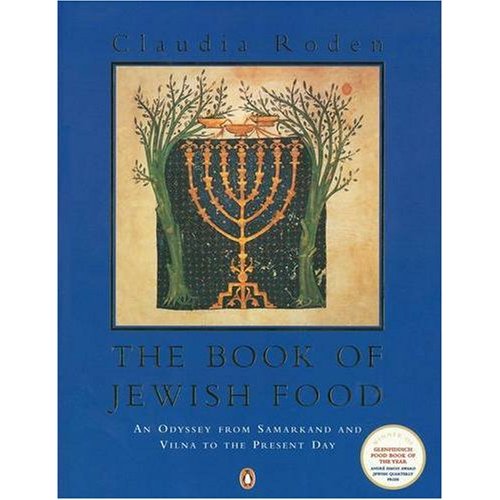
Claudia Roden’s The Book of Jewish Food – an encyclopedic look at Jewish cooking down the ages.

I was leafing through a few cookbooks this morning when I stumbled across my copy of Claudia Roden’s The Book of Jewish Food.

What struck me about it were the number of scraps of paper sticking out of the top, each bookmarking something I wanted to cook.

Little scraps of paper jammed between pages is a common theme in my library of cookbooks, but The Book of Jewish Food has by far the most.

Food is symbolic to many people and religions…it provides more than mere nourishment.  It’s a part of ritual and tradition, a way of solidifying a cultural and religious identity.

Published in 1997, Roden’s book charts the development of Jewish culinary tradition through the ages and describes how the Jewish people’s experiences, their travels around the world, led to the creation of a rich store of recipes and tradition centred around food.

This is a stunning account, one that maintains it’s focus on food, but which seeks also to describe the political, social and above all the religious context of that food.

Here is the story of the Jewish people, told through their food, and this duality is what makes this book such a success.

The book covers recipes and food from every part of the Jewish world, from Russia, Poland and Germany, England and America, North Africa and the Middle East right through to India and the Far East.

There’s breadth, but there’s also cohesion – the many and varied recipes are bonded together through the shared Jewish experience, an experience that Roden articulates so clearly.

More this way…

Sela Restaurant, Leeds

Eating out
Sela Bar Restaurant Leeds

I’m not very good at planning things properly, which is how we ended up at Sela the other night. It was quite accidental.

We’d planned to eat at The Reliance, but found it stuffed to the rafters with Christmas party type people, with a table waiting list that may have stretched into January.  So, we needed a quick alternative, and landed on Sela, a couple of doors down from the brilliant North Bar.

Sela Bar, downstairs, has been around for a while now, but the restaurant upstairs is a new venture.  It’s had some fairly good reviews, and more importantly, they had a table free on a nippy evening.

So, did it live up to the reviews?

More this way…