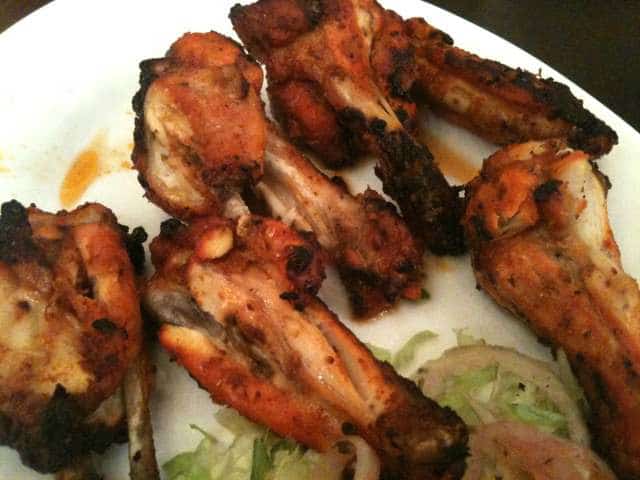
Bradford is rightly famous for it’s Asian restaurants. There are some very, very good places, ranging from the ambitious restaurant groups like the Aagrah or the Mumtaz, right through to tiny back street cafes.
Some are outstanding, cooking exceptional food, but – whisper this very quietly – some are terrible, serving little more than vaguely Asian flavoured slop to less than discerning customers. The last curry I had in Bradford, at one of the more famous cafe style places was just like this. It was a huge disappointment, especially compared to what it used to be like, but then again, reality rarely measures up to memory, does it?
You can’t let one bad meal get you down, so we decided to try to find somewhere better, and (cheers loudly) we found it.
The Shimla Kebab House is just on the edge of the university campus, which guarantees a steady stream of customers into the takeaway next door, and a generally busy feel about the cafe style restaurant.
More below…
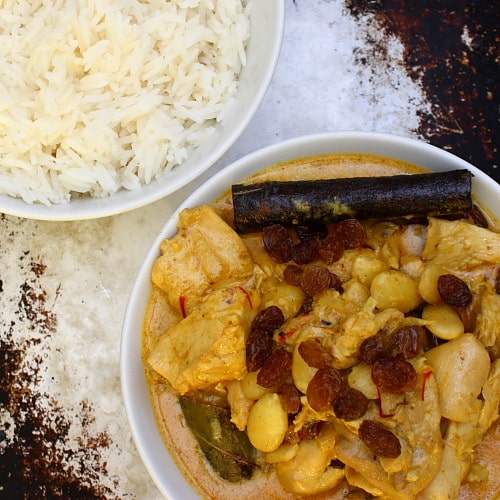
The korma.
The curry for people who don’t like curry.
Normally bland, tasteless and swimming in cream, the average Asian restaurant korma is as far away from the real deal as it’s possible to get.
I’d hesitate to say that the humble korma is the most abused of the curry house staples – that honour goes straight to the vindaloo – but the difference between a real korma and it’s Anglicised, watered down cousin is palpable.
It’s not clear when and how the korma developed, but it probably came into being in the Moghal’s Islamic courts in around the sixteenth or seventeenth century. On the sub-continent, a korma is a rich, special occasion dish that uses a lot of expensive spices and other top quality ingredients. It’s a party or banquet dish, made once in a while to celebrate something special, a long way from the standardised English approximations.
This recipe firmly takes the traditional Asian path. It’s a an exquisite dish with a hint of luxury about it from Madhur Jaffrey’s Ultimate Curry Bible .
.
Recipe follows…
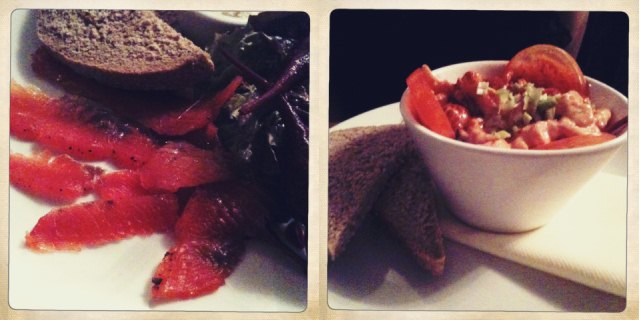
In retrospect, last Wednesday evening wasn’t the best night for our first visit to the Midnight Bell.
The presence of Arsenal football club at nearby Elland Road for an FA Cup replay against the mighty Leeds United meant that the Bell was packed to the rafters with Leeds fans out for a pre-match drink before walking up the road to the stadium and certain victory.
By half past seven, the place was empty and, it seemed, back to a normal Wednesday night. The slightly harassed staff looked relieved that it was all over.
The Midnight Bell is on of Leeds Brewery’s growing chain of eclectic bars and pubs, and sits alongside the brilliant PIN, the Brewery Tap and the newly acquired Garden Gate.
As you’d expect in any pub owned by a brewery as good as Leeds Brewery, the beer is great. At least three of the brewery’s own beers are on tap, with Midnight Bell the best of the bunch, a very good dark mild with a bit of chocolate in it. Very civilised.
More…
The most dangerous thing in your kitchen right now is probably that blunt knife at the back of the drawer with all the junk in it.
The problem is that many people find sharpening a knife tricky. There’s a definite knack to sharpening a knife properly, and not everybody has it.
Most of us need a bit of help.
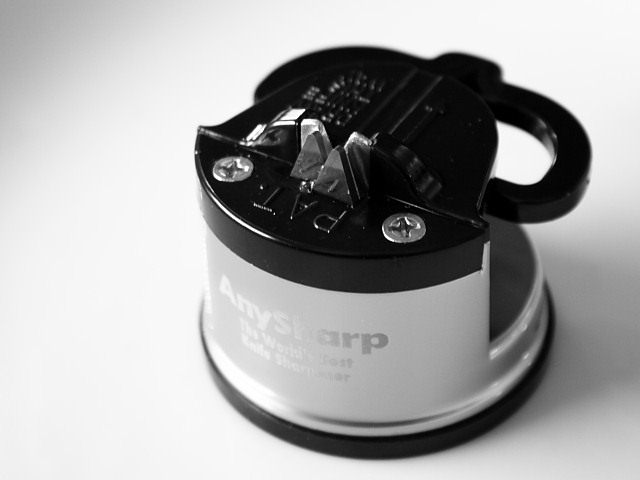
That’s where the AnySharp Pro knife sharpener comes in.
“The AnySharp Pro Knife Sharpener”?
Sounds a little Shopping Channel, doesn’t it, especially with the strap line of “The World’s Best Knife Sharpener” attached to it, but don’t let the terrible name influence you too much. This is a first-rate knife sharpener that will rejuvenate the dullest of blades, safely and with next to no effort.
The knife sharpener has a suction base that clamps to a kitchen work surface like a limpet. Once it’s fixed in place, it isn’t going anywhere.
More this way…
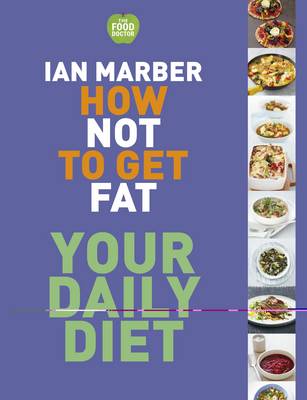
Ian Marber, the nutritional therapist behind The Food Doctor brand of healthy food products and clinics, is a mainstay of daytime TV and magazine and newspaper food and wellbeing columns. He released his first book in 1999, and has published regularly ever since.
How Not to Get Fat – Your Daily Diet is Marber’s latest book. It’s underpinned by the simple principle that diet’s don’t work. Marber claims that when people diet, their body experiences a famine, which it recovers from when the diet is over, storing away reserves of fat and energy to cope with the next famine. His theory is that dieting actually makes you fat, as the body adjusts to feast and famine.
The answer to this problem is fairly obvious, and presented in this book. Marber proposes that instead of dieting on and off, a better approach would be to just eat well all of the time. You’ll stabilise your weight, lose it where you need to, and best of all, get to eat good food. It’s just better not to put weight on in the first place.
More this way…
