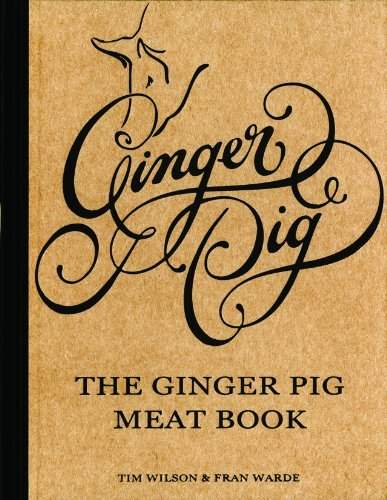
The Ginger Pig Meat Book, Tim Wilson and Fran Warde

Books
The Ginger Pig Meat Book Tim Wilson and Fran Wardle

Good meat is important.

If you’re going to eat an animal, the least you can do is to make sure that it was treated well when it was alive, and that you use its meat with care and respect.

Can you always do this, though?  Do you get a clear picture of where your meat came from, how it lived, what it was fed?

Probably not, especially if you buy meat from a supermarket.

You won’t get this at a good number of butchers shops, either, but there are butchers out there who understand the importance of good animal husbandry and how it impacts on the quality of the finished meat, how the quality of an animal’s life influences the quality of its meat in death.

These butchers are few and far between, but they’re out there.

The Ginger Pig Meat Book is written by a Tim Wilson, a butcher who clearly understands the relationship between good farming and good meat, so much so that he bought a farm and decided to do the whole thing end to end, a model that Wilson wants to see more of. Selling end to end creates a stronger responsibility for quality, a deeper and more direct provenance.

Wilson’s is a successful business comprising a North Yorkshire farm and a clutch of butchers shops that supply a number of top restaurants around the country and his experience and ability are key to this book, a cookbook with a keen eye on the parts of the food production chain that most other cookbook writers leave out.

More below….

What do you call your mealtimes?

Food politics
Is it tea or dinner?

Here’s a quick survey to start you off…just click on the big red button and answer two easy questions:

…I’ll post the results back here in a week or two.

A few weeks ago, we ate at Kendells rather excellent French bistro in Leeds.  They had a ‘tea time’ pre-theatre menu on the go, which I mentioned at the time was a nice little nod to the restaurant’s Northern roots, but it also got me thinking…

The only meal that the entire British nation seem to agree on a name for is breakfast.

After that, it all goes to pot.

Is it lunch? Is it dinner? Is dinner eaten at midday or in the evening? Is the main evening meal dinner or tea? Is supper a proper meal or more of a late night snack? Is there such a thing as brunch?

As with many other things in Britain, the origins of these variations are rooted firmly in geography, economics and class.

In the former industrial heartlands of the North, in Yorkshire and Lancashire and further North, people often use ‘dinner’ to mean a midday meal or lunch. Children eat ‘school dinners’, their parents give them ‘dinner money’ to pay for them. Lunch is widely used and understood, of course, but ‘dinner’ as a midday meal is something that’s stuck around.

‘Tea’ is also still widely used to indicate a main evening meal, but talk of ‘dinner’ in that context and nobody seems to notice the difference

I’ve been covertly conducting a blunt and wildly unscientific experiment in the office over the past few weeks, randomly interchanging lunch and dinner and dinner and tea in any conversation that warranted their use.  Obviously, I talk about food a lot at work, so there were plenty of opportunities to play around with…

More below…

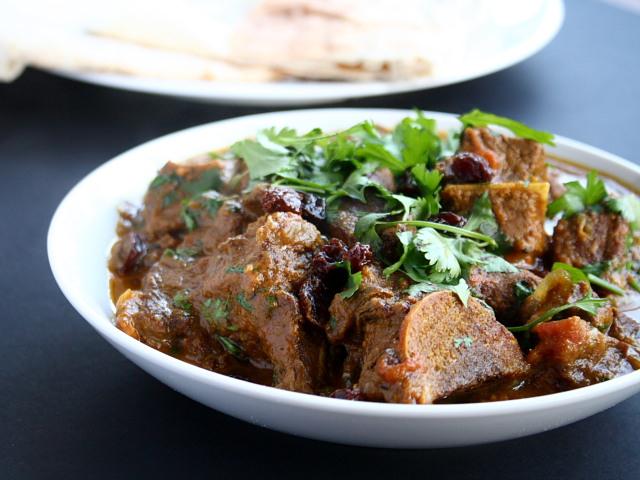
Moghul lamb with onions and raisins

Food & drink
Moghul lamb or mutton with onions and raisins, by Madhur Jaffrey

Indian and Pakistani food is rich and varied. I’ve cooked countless lamb or mutton curries, each with the same basic method and ingredients, each of which have been vastly different because of subtle differences in spicing and small tweaks in ingredients.

The length of the list of spices that go into most curries means that no two are ever likely to turn out the same, anyway. Different batches of spices taste different…some are stronger than others, some might be a little on the aged side, having sat around in a cupboard for too long, some might have been toasted before being ground, a practice that opens up a whole new smokey dimension to many common or garden spices.

The best advice around spices is to buy little and often, so that they stay fresh. Buying spices from a supermarket in dinky jars at exorbitant prices is not the answer. If you’re lucky enough to live near a decent Asian grocer, use it – you’ll find smallish packets of everything you need for literally pence. You’ll find packs of spices big enough to flavour a curry for an army too, if that’s who you want to cook for. Neither will cost you much.

So, this lamb curry is yet another variation on a theme, yet another startlingly different dish.

Recipe below…

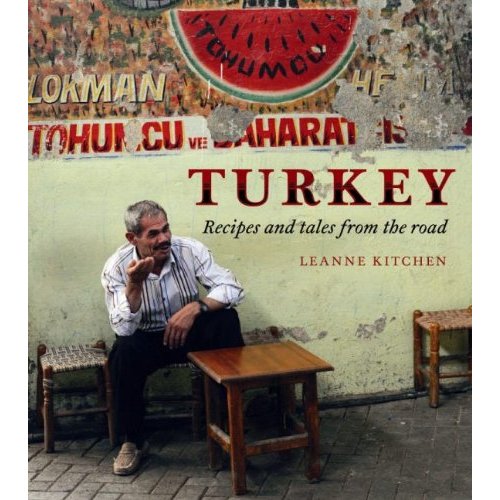
Turkey – Recipes and Tales From the Road, Leanne Kitchen

Books
Leanne Kitchen’s Turkey – Recipes and Tales from the Road

I’ve been lucky enough to chance across a series of excellent cookbooks lately, all of which share a similar quality.

They’re not just about food.

Food might be their reason for existing, but this clutch of books have more, they have a feeling about them, a feeling that the author has got under the skin of the cuisine they describe, understood where the food came from and why it’s the way it is.  They’ve understood the cultural context of the recipes they write.

This is the difference between a mediocre collection of recipes, and a cookbook that manages to talk to the heart and soul of the food it describes.

Momofuku is one such book, as is Thai Street Food.

Movida Rustica is a stunning example of the genre, and so too is Turkey by Leanne Kitchen, an inspirational and detailed look at Turkey’s rich and varied culinary heritage.
It’s easy to slip into lazy writing and use the word ‘evocative’, but there is a sense here that Kitchen succeeds in bringing Turkish cuisine to life, of joining the dots between Turkish food, culture and the reader.

More below…

Kendells Bistro, Leeds

Eating out
Kendells French Bistro Leeds

We ate at Kendells Bistro last week, and managed to spend a paltry £56 for a meal that I’d happily have paid double for*.

Here’s how it went…

Kendells is tucked away between the West Yorkshire Playhouse and the new BBC building.  It looks fairly low-key and unpromising from the street, but step through the door, and you’re in a typical and traditional French bistro, all wooden furniture, low lights, candles melted down the sides of wine bottles (French vintages only, naturally), pictures of glamorous French people on the wall, Edith Piaf singing at a respectably unobtrusive volume in the background…

The menu is chalked up on a massive blackboard, in traditional French bistro style.  In one sense, that’s quite annoying if you’re the type of person who sometimes stares at a menu for a good fifteen minutes before deciding what to order…you do tend to feel a little conspicuous gawping at a blackboard for anything more than a minute or two, but on the other hand, the blackboards serve a useful practical purpose – there’s no point printing a menu because it changes every day.

A moving menu like that indicates that the cooking is ingredient centred. Several of the dishes on the blackboards were marked as sold out, and they were joined by others throughout the evening, a waiter popping up every now and again to chalk on the board.

This is a good sign – fresh cooking that’s gone when its gone, that uses what’s best on the day as its basis.

The menu is split into a pre-theatre/early bird “Tea Time Menu”, and a longer A La Carte menu.  There’s a clever nod to the restaurant’s northern roots there…is your evening meal ‘tea’ or ‘dinner’?

More…