Foosteeyeah, or sesame and peanut slices

Food & drink
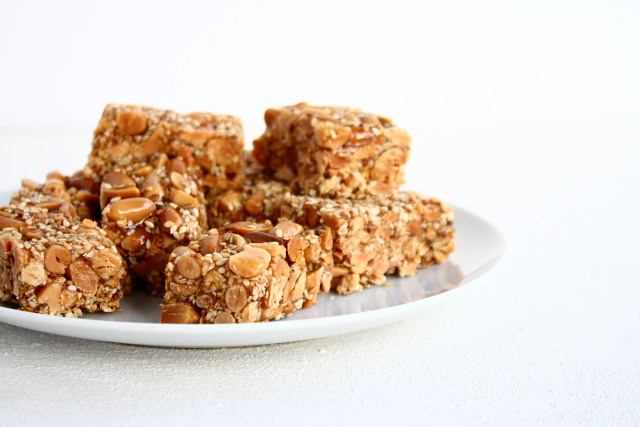
Foosteeyeah, or sesame and peanut slices from Nouha Taouk’s Whispers from a Lebanese Kitchen

It’s often said that simplicity in cooking is a virtue, that ingredients should be allowed to speak for themselves.

This recipe has just four ingredients, and at a push, you could drop one of those, but they’re carefully combined into something quite exceptional, something that won’t hang around for very long once it’s cooled.

The trick to these sesame and peanut slices is to toast the nuts and seeds just right.

This isn’t easy, especially when you’re handling a kilo and a half of ingredients, but it’s only that sort of volume that will let you produce nearly thirty slices and – believe me – you want that many slices.

Peanuts and sesame seeds need to be handled differently, but the same careful approach is needed.  If you burn either, you’ll end up with a bitter, smoky taste that will defeat the whole recipe.

The peanuts, a kilo of them, skinned, plain (not salted) go in the oven, in a single layer spread across a couple of baking sheets.  Fifteen minutes at 160c should do the trick, as long as you take them out once or twice and shake them around so that they roast evenly on all sides.  The peanuts should be a richer, more golden colour, but they mustn’t burn or catch at all.

If they do, start again.

Sorry.
More this way…

Laynes Espresso, New Station Street, Leeds

Eating out
Laynes Espresso, Leeds

Leeds is littered with bad coffee shops.

They’re everywhere, on every corner, selling their burnt-out espresso watered down with a gallon of milk to disguise the terrible taste of the coffee within.

In among all the multinational chains, there are a few independents, places serving the real deal and serving it with passion and skill.

Opposite, La Bottega Milanese…you know I mean you, right?

Two independents are just a drop in the ocean, but it’s a good start, and it’s great to see both doing well, with La Bottega set to open a new site in The Light and Opposite regularly whipping the upmarket competition in the Victoria Quarter on both quality and price.

These two Leeds coffee heroes have just been joined by a third – Laynes Espresso.

Sited on New Station Street, the sweeping street leading from the station to the city, several thousand people pass Laynes every morning, and for most of those people, it’ll be the first coffee shop they see in the city.  In terms of location, it really couldn’t be better placed.  The big task that Laynes have is to tempt people the short distance across the road and into the shop before they catch sight of Cafe Nero at the end of the road.

One of the best ways to attract people is to use other people to do it for you, and in positioning a counter and stools right across the big front window, Laynes have created one of the city’s best people watching spots.  The opposite is also true – people sat at that counter are a potent advertisement.

Is there anything better for a food business than people being seen to enjoy your food?

At the core of it all is something really simple.

Extremely good coffee.

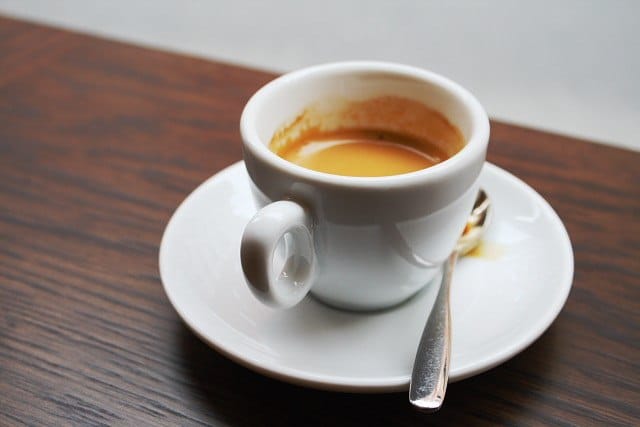
Carefully selected single estate beans that produce rich, smooth and powerful espresso, the sort of shot that won’t get lost in a latte, the sort of drink that people recommend to other people.

More coffee musings below…

Jibneh layyin, or Lebanese loose cheese

Food & drink
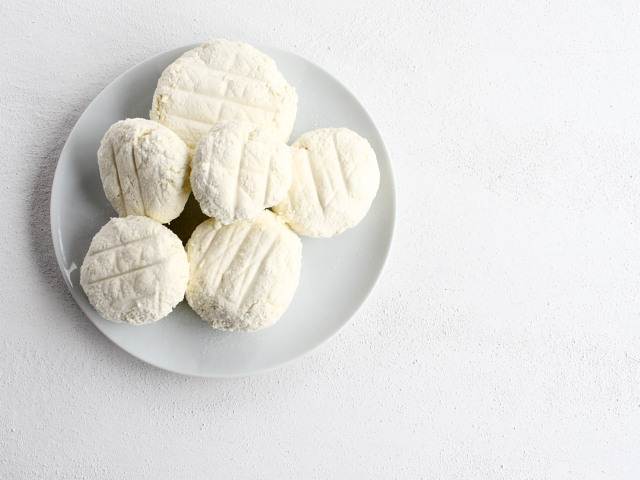
Lebanese loose cheese, jibneh layyin

Making your own cheese is always an adventure.  This is the simplest possible method, but there’s still something magical about it, about how warm milk just splits apart with so little provocation and turns into something completely different.  From this humble start, curds forming in a pan of milk, come all forms of cheese.

The simplest jibneh layyin and the most exquisite Roquefort all start in that pan of milk.

Loose, open textured cheeses like this one are common all over the Middle East, where they’re eaten with vegetables or just as simple table cheeses.  There are similar versions in other parts of the world, such as that Indian classic, paneer, which is made in nearly the same way.

The method is simple, and it’s a great place to start if you’ve got designs on more complicated cheese making.  Essentially, all you need to do here is curdle milk and collect the curds together into balls, but you’ll learn something of the technique and the way that milk behaves and reacts through the cheese making process.

Four litres of whole milk will make about ten or so small cheeses.  Warm the milk in a large pan until it reaches 43c.  This isn’t particularly hot, and you should still be able to put your hand into the milk comfortably.

Take the pan off the heat and add four or five drops of liquid rennet, dissolved in a little water.  Rennet can be hard to get hold of – try health food shops, or more likely, look on the Internet.  I bought mine from eBay.

If you can’t find rennet, you could just use lemon juice – the juice of half a lemon will have much the same effect.

More this way…

Would you risk jail for a bad restaurant review?

Food politics
Should restaurants take legal action against reviewers?

There’s a cautionary tale here, or a call to arms, depending on which way you look at it.

Mrs Liu went to a restaurant in Taipei, found the food ‘too salty’, saw a couple of cockroaches in the kitchen,  wrote about his experiences and ended up being sued for libel by an outraged restaurant owner. She received an incredibly harsh thirty-day jail sentence, two years probation, a £4,300 fine and a seriously bruised ego.

Whilst it’s certainly not unusual for restaurateurs to take their figurative bats home and try to sue reviewers, a jail sentence would seem to be a tad excessive for a dodgy review.

Why such an over the top reaction?

It’s fairly clear why restaurant owners are protective of their businesses.  Their restaurant is their livelihood, and that livelihood relies almost entirely on reputation.  Good food is a pre-requisite, but people knowing about that food is far more important.  There aren’t many businesses that depend so heavily on word of mouth or public perception for success, or where that success can be dashed so decisively when the tide turns the wrong way.

Running a restaurant is almost all about reputation, and it takes a lot of hard work to build that reputation, and even more to support it.  That’s why restaurant owners can get defensive sometimes, and, really, that’s fair enough.

I don’t blame Mrs Liu’s nemesis from feeling affronted in the face of a bad review.

I probably would have flipped.

This raises an interesting question about fairness in restaurant reviews – people have an absolute right to express their opinion, as long as it’s factually correct and given in good faith, but restaurateurs have an equally absolute right to defend themselves in the face of malice or inaccuracy.

More below…

POLL RESULTS – Dinner or tea?

Food politics
Dinner, lunch, tea or supper – Poll Results

Remember the other week I ran a survey about what people call their main mealtimes?

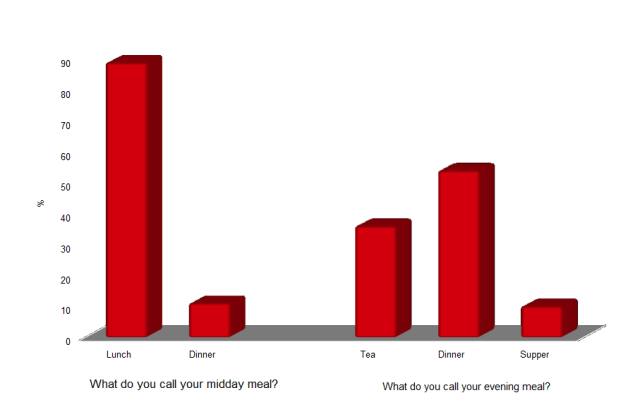
The results are in, and as you can see above, they’re quite surprising.

In all honesty, I wasn’t expecting such a decisive result over the mid-day meal.

Lunch it is, and that appears to be that!

Results for an evening meal name were a bit more evenly spread, with a strong third of people calling it ‘tea’, just over half using ‘dinner’ and the rest, a marginal 10% calling it ‘supper’. As I originally thought, it doesn’t seem to matter what you call your evening meal, you’re likely to be understood.

One commenter set out his views on the matter and caveated the whole thing with the disclaimer that “this information is only valid within 15 miles of my house at the top of North Yorkshire”.  Funny, and striking right at the heart of the regionality of mealtime naming conventions.

88% of participants (95 in total) were from the UK, 9% from the US and the rest from Canada, Oz and New Zealand.

Many thanks to the single person from somewhere in Indonesia who took the time to fill out their answers.

Thanks to everybody who took part.