Feeling the burn…West Dean Chile Fiesta, Chichester

Food & drink
West Dean Chile Fiesta Chichester

Chile Peppers are one of those vegetables (actually berries!) that seem to provoke either unbridled masochism or abject terror.

I like a bit of both personally.

But like wine (my other passion), there is a breathtaking and intriguing array of varieties as I discovered close up on a recent visit to the annual ‘Chile Fiesta‘ held near Chichester on the UK’s South Coast. Every imaginable shape, size, colour and heat strength was represented at this celebration of the capiscum in a display of three hundred varieties of chile. The event has grown from a single day, centered in the cloistered walled gardens of West Dean College, to three days filling several fields.

There seems to be an increasing number of people who like it hot…

I love to grow my own chiles – either from seedlings commonly available from most garden centres (Jalapeno, Apache), or the weird and wonderful, from seed (such as the Bolivian Rainbow or distinctly pornographic Peter Pepper).

Basically, wherever you are, you can grow them like tomatoes (they can handle the soil drying out a bit better).

Oh… and they love heat. Funny that.
What do you do with your chiles? Recipe next…

Salt cod brandade

Food & drink
Salt cod brandade

Remember that salt cod I made the other week?

Here’s what became of it.

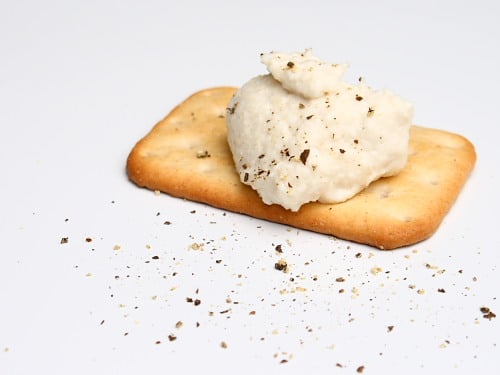
Brandade de morue or brandade de bacaloa, depending on if you’re French or Spanish is a simple emulsion of salt cod and olive oil, most often eaten with bread.  It’s common across France and Spain, and versions of it exist in most other southern European countries.

Since you went to so much trouble to salt the fish, it seems a shame to try and get rid of all the salt now, but get rid of it you must.  Soak about 400g of salt cod in the fridge in a few changes of water for at least twenty-four hours, probably longer, until the fish is reconstituted properly and most of the salt has gone.

[continue reading…]

Moroccan beef tagine

Food & drink
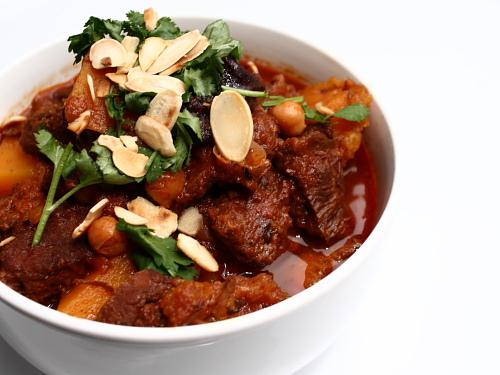
A traditional Moroccan taine of beef, with prunes and squash

Moroccan cuisine is rich with influences that betray the country’s history as a strategically important place, with distinct Arabic influences laid over more obvious North African traits.  There’s also Moorish and European influence in there, too, pointing to Morocco’s closeness to Spain, and its position as a gateway to southern Europe.

The tagine is emblematic of the nation’s food.

It’s a versatile, one pot dish, cooked slowly and gently to give the spices time to deliver their punch and the meat time to melt and tenderise.

Tagines take time to cook, but are quick to prepare…short bursts of activity punctuate long periods of watching a slowly bubbling pot.  The process is very rewarding, as you watch an unpromising pile of ingredients blend themselves together into a sublime dish.

This version uses beef.  Any stewing cut will do, but shin is the tastiest and best suited to sturdy flavours and long cooking.

Chop 600g of shin beef up into bite sized pieces and add a spice rub made from a level tablespoon each of ras-el hanout, ground cumin, ground cinnamon, ground ginger and sweet paprika, seasoned with salt and black pepper.  Toss the beef around to make sure that the spices completely cover it.

Cover the meat and leave it in the fridge for a few hours, overnight if possible.

Ras-el hanout is a mysterious ingredient.  It’s best likened to a garam massala, although in taste and composition it’s completely different.  No two ras-el hanouts are the same, but they’re fundamentally a mix of cardamon, cloves, cinnamon, cayenne, cumin, coriander, nutmeg and the like.  Some mixes have over a hundred ingredients.

My packet was marked as one of Delia Smith’s ‘cheat’ ingredients, but please don’t let that put you off.

More this wasy…

How much do you drink?

Food politics
NHS drink tracker application

Do you know how many units are actually in a glass of wine?

Do you know the difference in alcohol content between a large glass of red and a pint of strong beer?

The answers to both of these questions is probably ‘no’.  Either that, or your guesses  are way off the mark.  Mine definitely were.

It’s fairly safe to say that many people grossly underestimate the amount of alcohol they drink…especially when asked by their doctor.  Not really knowing, or at worst deluding yourself about the amount you drink doesn’t seem like a very good place to be in.  Isn’t it better to know?

This app from the NHS is a great way to get a better grip on the number of units of alcohol in your drink.

That’s useful on the basis that if you know about the number of units in your drink, you can make more informed choices about what you drink, how often and in what quantity.

There’s also an iPhone app that mirrors this functionality, but tracks your consumption over the weeks and months, producing some seriously scary graphs.  It’s easy and quick to use – just tap through a couple of screens and you’ve logged a drink.

More this way…

How to make salt cod

Food & drink
How to preserve cod by salting

The last time I cooked with salt cod was a disaster.

In retrospect, the particular piece of fish I bought looked like it had been sat in a dark and dusty corner of a market stall for several years before some poor mug came along to liberate it.

That poor mug just happened to be me.

This time, I’ve made my own, because even though my previous experiences of salt cod were a bit of a let down, I think it deserves a second chance.

The process is simple…it uses just two ingredients – cod and, perhaps unsurprisingly, salt.

This way for the ever so simple method…