Shear’s Yard, Leeds

Eating out
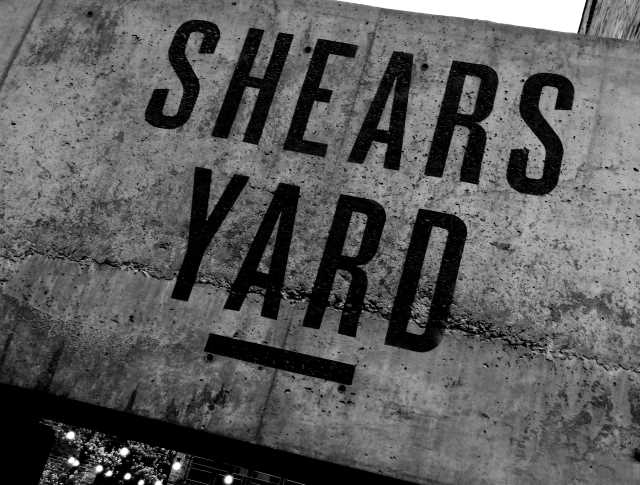
Shears Yard restaurant, Wharf Street, Leeds

A long time ago, Leeds only had greasy spoon-type cafés , dodgy pubs, and the odd decent Italian, and that was about that.

Then came Arts Cafe down on Call Lane.

It served good food, good coffee, good wine, and a few decent bottled beers.

It was a little bit – dare I say it – European.

And people liked it. They liked it very much indeed.

Other places like it started to spring up, and Leeds began to develop a proper, grown-up restaurant and café scene. I don’t think it’s unfair to say that Arts had a profound influence on the way that people eat out in Leeds today. Art’s was then, and it is now, just a lovely place to spend some time.

It was perhaps inevitable that the people behind Art’s would want to spread their wings at some point, and that happened last year with the opening of Shears Yard around the corner on Wharf Street, in the building that housed Livebait in its several incarnations, not that it’s really recognisable as such today. The building has undergone a total refit, stripped back to the bare brick, revealing its former life as a warehouse of some sort, with a waist-high plinth of polished concrete cast against the walls, beams and girders open to the light that floods in through the large skylights. Industrial filament bulbs hang from a cat’s cradle of thick electrical cords, swung from the ceiling like miniature trapeze lines over beech tables and chairs.

More…

Casa Espresso’s Barista Basics and Latte Art courses

Food politics
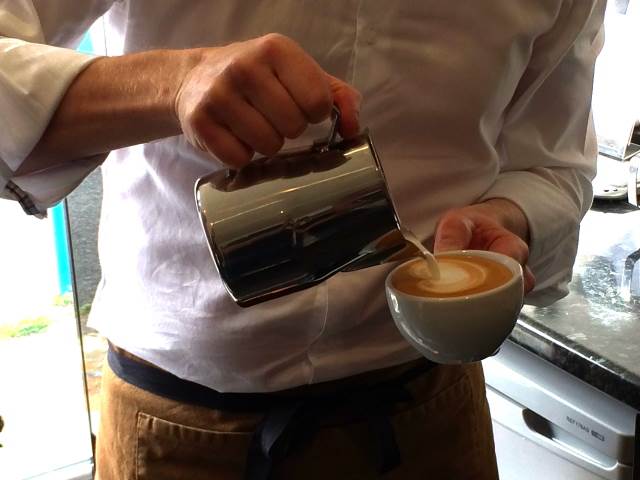
Casa Espresso’s barista and latte art training courses

I spent a year abroad n the mid-Nineties, backpacking around the world. We headed east, through India and the South Pacific, and ended up in New Zealand, then Australia, and then across the ocean into the Pacific Northwest of North America, to Vancouver, Seattle and Portland.

This journey around a big chunk of the Pacific rim introduced me to coffee as a serious subject, something more than the instant rubbish we’d drunk at home in Britain.

Each of these countries had an exploding coffee culture, and people were starting to take coffee very seriously indeed. When we got to Seattle in particular, we found a city that seemed to be almost entirely fueled by this mysterious bean … there was a whole industry and a culture there that simply didn’t exist in Britain. I remember sitting in a coffee shop in Capitol Hill pondering that this sort of thing could really work in the UK, and of course, I turned out to be correct, not that I had any hand at all in making it happen, apart from enthusiastic support for the first wave of big chains that sought to emulate the Starbucks experience, and later, a more refined appreciation for many of the independent places that have started to crop up around here in recent years, in the wake of the chains’ success.

It’s a mysterious thing, this dark, powerful drink, and everything that goes with it. There’s a certain aura around those who make it, a sense that this is not something that can be done by just anybody, a sense that these people, these baristas, are experts in their field and should be left to get on with what they do, and I’ve believed this for years … I can’t make coffee at home as well as the best independents can, with their expensive espresso machines and their wealth of knowledge.

And this is the real point … brewing coffee is a science. It’s a process that can be explained and reasoned in clear, logical terms, but it’s more than that … there’s an art to it too, an art in knowing which of the thousands of variables to tweak to make that shot of espresso perfect, or to make the milk in that latte as smooth as silk.

It’s an art, and not everybody can do it.

More…

Almond Bar, by Sharon Salloum

Books
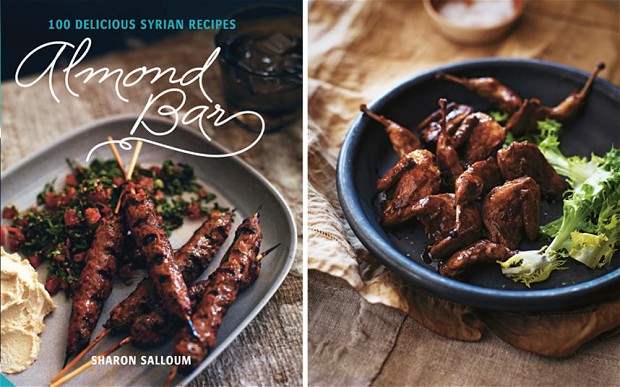
Sharon Salloum’s Almond Bar: 100 Delicious Syrian Recipes

Many cookbooks come from a family’s kitchen, a reflection of the food they cook and eat together.

This is good.

It shows that food is more than just fuel, that it’s a means of drawing people together, something that knits through the fabric of daily life.

Sharon Salloum’s book of Syrian food, Almond Bar, has that sense of family and familiarity, that tangible feeling of warmth and heritage. It’s a collection of Syrian food from Salloum’s family, most recipes with a story attached, some that have translated into dishes served in Salloum’s restaurant.

More…

Semolina bread

Food & drink
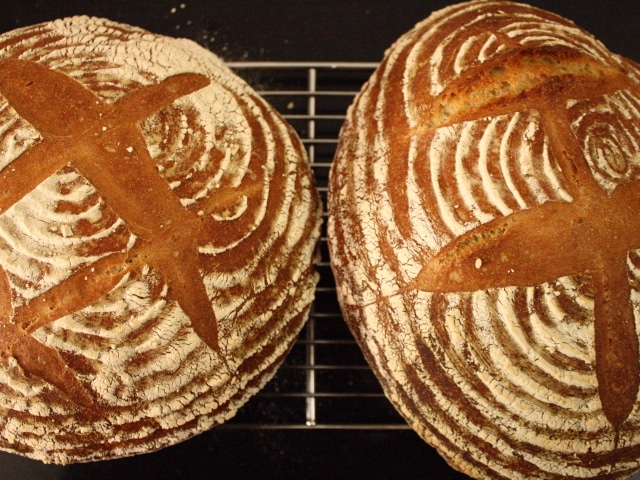
Tartine Bread’s semolina loaf

The more I bake bread, the more I realise that I know so little about it, the more I understand why being a baker is a calling as much as a profession.

I’ve started to experiment more, recently, started using different techniques and methods to home in on the things that I really like about a proper artisan loaf … a shatteringly crisp crust, a wide, open crumb, a proud spring in the dough as it hits the heat of the oven. Most of all, I want my loaves to sing, for they all have a song, a melody of cracks and groans as they cool on the rack, the crust contracting and settling in the cool air.

I’m aiming for these things because each of them means that I’ve baked a loaf that satisfies the soul as well as the body.

I bought yet another bread book a year or so ago, the quite frankly beautiful Tartine Bread. I read it almost cover to cover and loved every word and every picture, but my first attempt to bake from it, using the master recipe, was a disaster, resulting in a dough that was hard to handle, that in turn produced flat, heavy loaves that were only really good for feeding to the ducks on the canal. I went back to my tried and trusted methods, and left Tartine Bread on the shelf.

It kept calling me back, though … the photos looked so good, and the words spoke right to my reasons for baking bread, about the elemental nature of bread making, of the tactility and connection with age-old traditions. I started to read it again, with greater understanding of the science and process that goes into a loaf, and I started to realise where I’d gone wrong, where I’d missed the whole point that the book was trying to make.

The main problem was this … I’d listened to the book, not to the bread.

A good baker listens to his or her dough and reacts to it. I’d just followed the recipe, and not taken account of the temperature of my kitchen, which affects the rising and proving times, the type of flour I’d used, how active or not my sourdough starter was, how hot my oven could get … all of these things that could make or break a loaf of bread, and none of which could be prescribed in any book.

And this is where Tartine Bread truly excels. It provides the method, the step by step guide on how to produce a loaf of real bread, but it also explains in some detail why certain things happen a certain way, and how the baker can control these variables to produce the loaf he or she wants in the time he or she wants to produce it in. This is the real skill of the baker, this ability to listen. Tartine Bread talks about the spaces inbetween.

Bear this in mind as you read the rest of this post, because my best results from this book haven’t followed these methods to the letter … they’ve deviated here and there where something hasn’t been quite ready, or quite right, and that’s been a good thing, an opportunity for me to learn.

More…

Slow cooking in the sand

Food politics
The importance of slowness in food, and food in celebration.

It started with a text message.

“Chris says can you pack a tie. You’re off to a wedding or something”.

I looked down at the carefully packed bags at my feet and realised that ‘bring a tie’ actually meant ‘bring a whole set of smart clothes, including shoes, not just a tie’, and started to unpack everything again. ‘Smart clothes’ weren’t really part of the plan.

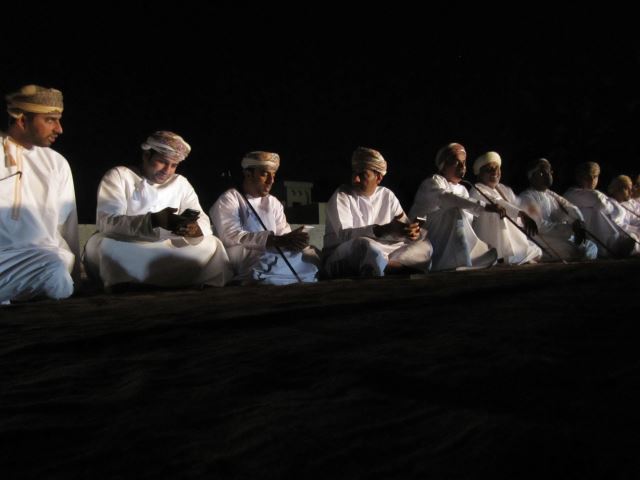
That text message led me on a journey across the centre of Oman to a a town just off the main highway, and into the grounds of a mosque where Rashid was celebrating his marriage.

Omani weddings are very fluid affairs, and I’d ended up there because my friend Chris had been asked along by another friend of his who knew the groom. Apparently, that sort of ultra-tenuous connection is perfectly fine when it comes to wedding celebrations in the Middle East – there’s none of the formality and fretting about minor things like guest lists or the rest of the baggage that comes with a British wedding.

So, there we were, in a dusty compound, me dressed in a crumpled shirt, looking a little like I’d got hopelessly lost on the way to a fairly lacklustre conference of some sort, Chris in a dishdasha, a traditional Omani form of dress, and feeling really quite Western and concerned that he’d committed a huge social faux pas (he hadn’t). We’d driven for miles to get there, and the fluidity of proceedings, and the fact that these things go on for days, meant that we’d missed the ceremony itself, but had arrived in time for something to eat, which we think was the part we were actually invited to anyway.

It was difficult to tell, so we just shook hands with a lot of people, sat down where the man obviously nominated to look after us told us to, and waited.

There were mats everywhere, big rattan or cotton mats across the whole of the compound. Given the way we were sat, lined up along one edge of a large mat facing and smiling and nodding at another line of traditionally attired Omanis tapping away on their smartphones, I guessed that they were expecting a couple of hundred people.

Not much happened for a while except more smiling and nodding, as more and more people emerged from the hot night, the air thick and close, wisps of dust kicking up from people’s feet, a sense of expectancy and quiet reverence hanging in the air. More…