What’s your identity worth? … or how to make falafel

Food & drink
What’s your identity worth? … or how to make falafel

In real life, I manage information security for a big financial organisation. It’s the most fascinating job in the world, this juggling of risk versus reward versus control. We have to get things just right, so that our business can do  business, but our customers remain safe.

I know that the biggest asset we’ve got as an organisation is your information, your name, your address, your date of birth … all the things we know about you because we asked you when you opened that savings account or took out that mortgage.

All of that seemingly insignificant information, just bits and bytes and snippets of this and that roll up into something quite vital, a shadow of your very life, a shadow that people can and do try to steal and misuse and abuse and take advantage of.

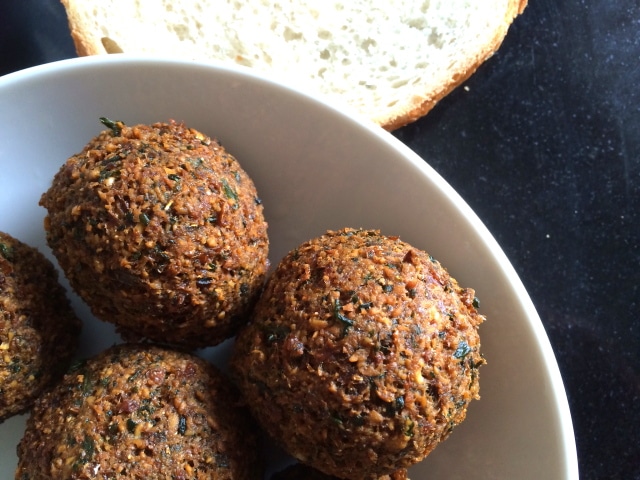
One time, years ago, I made falafel. They collapsed in the fryer, leaving me with a disgusting sludge of chickpeas and vegetable oil. For that reason, I’ve resisted making falafel for well over a decade, but the time has come to conquer that fear, for conquer it, I must. I really do need to get over things like this …

There’s nothing complicated about falafel. They’re just balls of ground chickpeas, seasoned heavily and packed with fresh herbs, then deep fried.

The trick is in the process.

The stats on identity theft are absolutely horrifying. It’s a crime that’s seemingly sprung out of nowhere, yet has been with us for millenia. People have always been charlatans, they’ve always practiced deception for their own ends, but these days, all of that’s easier and simpler to execute on an extremely grand scale. Your lovable conman is now part of an international crime gang, and you and me are the target.
More…

How to make corned beef

Food & drink
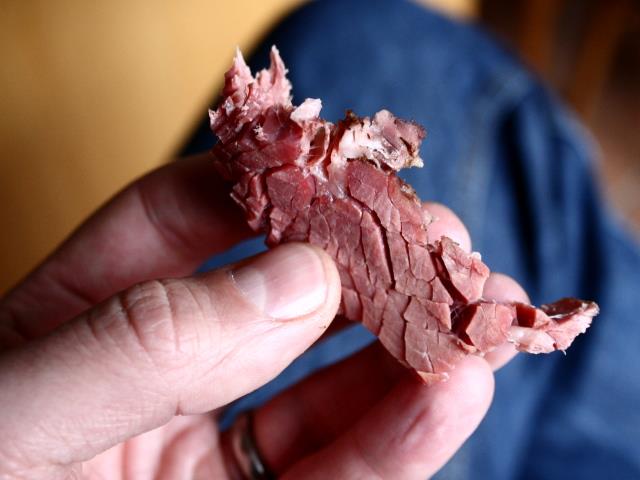
Brining beef brisket to make corned beef

One of the many curious things I remember about my childhood is corned beef hash, an odd dish of potato and corned beef served up on those nights when mum seemed to have run out of inspiration. It was always made of mashed potato, with corned beef similarly mashed right into the potato, then fried until burnt on the bottom.

We ate it with too much salt and disappointed faces.

Leading up to this point, there was always The Accident, wherein somebody, usually my dad, would attempt to open the can of corned beef with an unusual amount of enthusiasm, and consequently and somewhat inevitably, cut their hand to ribbons on the razor-sharp edge and spiral of wire, a coiled accident-waiting-to-happen.

Often, the can just wouldn’t open because of shoddy workmanship causing the all-important key to break off, which then led to ever more treacherous attempts to open the stupid can with whatever was to hand. ‘Whatever was to hand’ rarely included a can opener, but there was always a hammer and sometimes a screwdriver.

I realise now that that corned beef hash was cooked all wrong, that it’s a far better dish if the potatoes are left slightly firmer and just crushed to break them up, that a burnt base isn’t a particularly good addition, and most of all, if you use proper corned beef, corned beef that doesn’t come out of a lethal can.

The big problem with this ‘do it properly’ approach is that ‘doing it properly’ means making your own corned beef. This takes time, a little planning, perhaps a little Internet shopping, but it can be done, and it’s a great introduction to curing and preserving meat. Corned beef is just brined beef brisket, and brining is one of the simplest methods of transforming cheap cuts of meat into something quite sublime.

More…

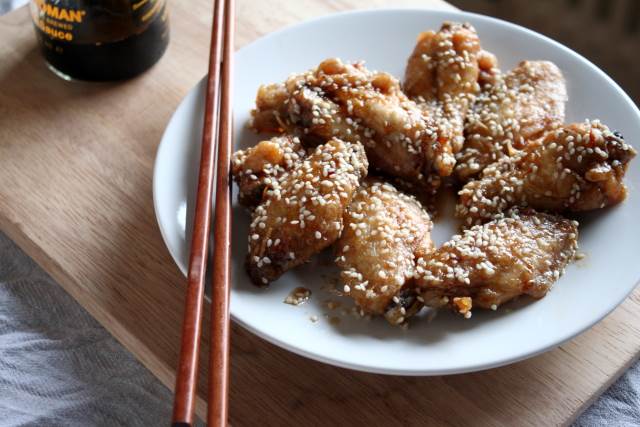
Nagoya tebasaki, or deep-fried Japanese chicken wings

Food & drink
Japanese deep-fried chicken wings, tebasaki Nagoya

It’s often the odd cuts of meat  that offer the most interesting possibilities to the chin the kitchen, the parts of the animal that are sometimes viewed as little more that waste in waiting.

So it is with chicken wings, piled up high in the corner of a butcher’s shop, looking as if there’s no hope of anybody doing anything with those scrawny, skinny offcuts.

That’s a huge mistake – the wings of a chicken hold some of the tastiest, most succulent meat on the bird, wrapped in skin that crisps quickly and easily. Each wing may just be a couple of mouthfuls, but there’s an earthy messiness to eating them that makes the whole thing a pure joy.

The Japanese have a nice line in chicken wings, part of their tradition of karaage, or deep-fried chicken. Really, there’s nothing quite like the Japanese way of deep-frying a variety of things, from karaage through to tonkatsu to  tempura … they’ve got this down to a fine art.

Tebasaki is essentially deep-fried chicken wings tossed in a simple marinade immediately after cooking and sprinkled with sesame seeds. Prepared this way, chicken wings are astonishingly good.

More…

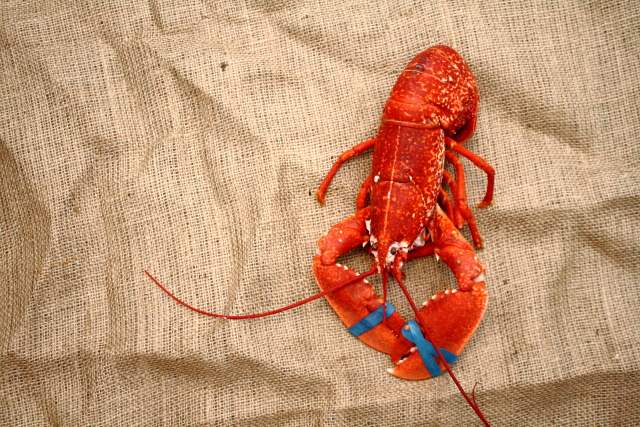
How to kill and cook a lobster

Food & drink, Food politics
How to kill and cook a lobster

Every time I wander through Kirkgate Market in Leeds, I end up walking up the row of fishmongers towards the exit to Vicar Lane, and past the very last fishmonger, the best of the lot, the one with the stall laden with bright, clean fish and shellfish, packed in ice.

There’s always a box of live crabs, and next to it a box of lobsters, normally with a kid in a pram parked in front of them, staring in wonder at these weird creatures of the sea, their claws bound with rubber bands to protect us and them, strange tentacles feeling around their polystyrene home.

The other day, I took the plunge and bought a lobster, a stunning Cornish creature with a mottled brown shell, flecked with red and blue, distinctly different the Canadian cousins it shared its box with. The Cornish lobsters were at their prime, and looked fresher and livelier, given the considerably shorter journey they’d taken from the deep waters of the Atlantic ocean off the southwest coasts. These were prime lobsters – big, strong, vigorous, with powerful claws and rock hard shells. A medium-sized one cost me about fourteen quid  not cheap, but not a bad price for something of such obvious quality and freshness.

It was fairly odd taking the train home with this deep-sea creature sat in a plastic bag on my knee, squirming around occasionally in an extremely disconcerting way. We both survived the ordeal, but I don’t know if the woman next to me realised quite why I was so restless and nervous of my shopping, twitching every time my dinner moved …

So, lobster home, safely cooped up in the sink. What to do next?

More…

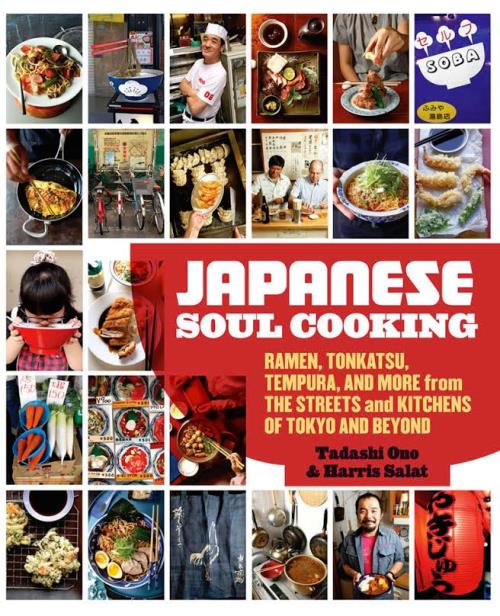
Japanese Soul Cooking, by Tadashi Ono and Harris Salat

Books
Japanese Soul Cooking, by Tadashi Ono and Harris Salat

Japanese food has a reputation for being different and difficult, mainly because that very difference helps to create an illusion of difficulty … it’s a kind of self-perpetuating myth.

Japanese cuisine is in many ways so radically different to Western food, and its strangeness is off-putting to some people … after all, this is a food culture that has raw fish at its very heart. I love sashimi, but I can see exactly why lots of people don’t.

Sushi and sashimi are only a small part of Japanese cuisine, though, and there are many more styles of food in the Japanese culinary canon. This book, Japanese Soul Cooking by Tadashi Ono and Harris Salat, explores the types of food that ordinary Japanese people eat day in, day out. These are the dishes that dominate domestic kitchens and sell out in small diners and hole-in-the-wall restaurants.

This is the food that the Japanese really eat.

Japanese Soul Cooking latches onto the current fashion for soul food, which more ordinarily nods towards the American Deep South, and shows that there are similar traditions all over the world, traditions of comfort eating, of family recipes handed down through generations and changed little, of basic dishes that are about more than just feeding the body … big, warming recipes that satisfy the soul. More…