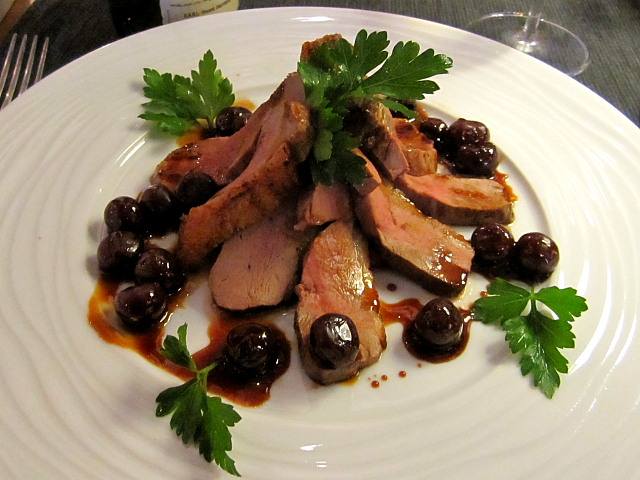
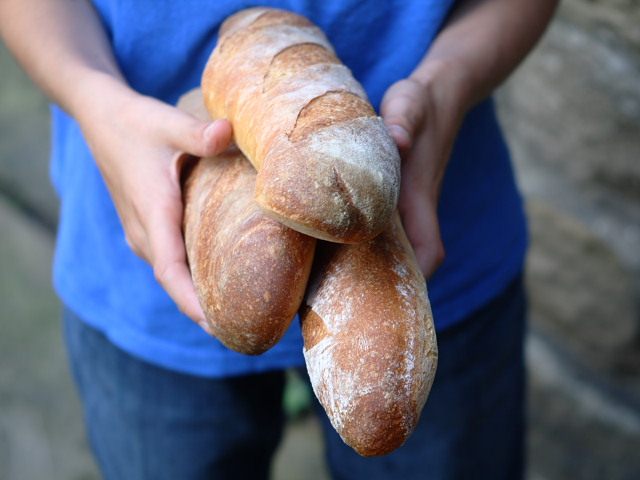
Les Millésimes, Noyers-sur-Surein, Burgundy, France

Eating out
Les Millésimes, Noyers, Burgundy, France

Noyers-sur-Surein is a place in the heart of Burgundy that’s famed for its mediaeval buildings and the ruined castle high on the hill overlooking the town.

It’s a beautiful setting, a town of solid mediaeval architecture sat in the middle of the rolling Burgundy countryside.

Seemingly along with all French towns, Noyers has its incredible boulangerie, a couple of bars, a delicatessen and a few restaurants, the most celebrated of which is Les Millesimes.

Les Millesimes part of a small food empire that stretches to a delicatessen and wine cave alongside the restaurant.  The restaurant spills out onto a quiet side street, that passes between the front of the restaurant and the back of the delicatessen and wine cave.  Waiters and kitchen staff flit between both sides of the enterprise, carrying dishes and produce.

It’s a very picture-postcard, idyllic French scene.

We arrived and asked for a table in French, on which the waiter, noticing that us speaking French might be more of a struggle than him speaking English, graciously carried on in English, and continued to do so all night.

Now, the food is hard to describe properly, so I’ll just be straightforward about it.

It was astonishingly good.

More…

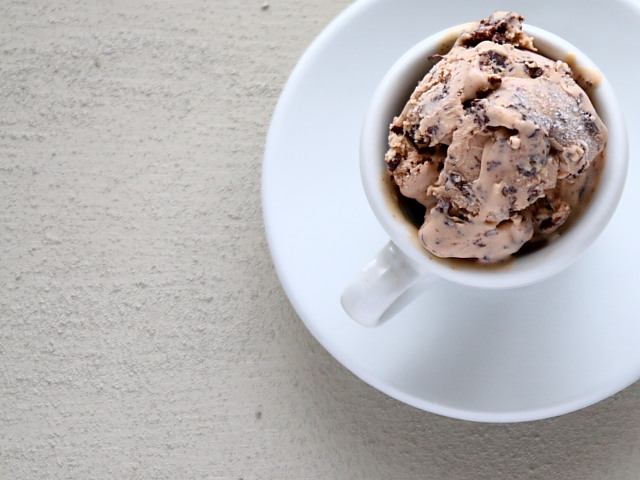
Gianduja gelato, or Italian hazelnut and milk chocolate ice cream

Food & drink
Hazelnut and milk chocolate ice cream

If you’ve read around this blog a bit, you’ll know that I’m not in the game of gratuitous self-promotion, but the other week, I astonished myself and the rest of the family by making an utterly sublime vanilla ice cream.

I know it was good because the whole lot disappeared over the course of a couple of days, and I overheard one of the kids asking for that specific ice cream over the other tubs of commercial stuff in the freezer.

Huge result.

Flushed with success, I decided to have another go, and on the basis that a vanilla ice cream is a blank canvas, albeit a very elegant one at that, I tried my hand at something more complicated.

Gianduja gelata is an Italian classic, a hazelnut and milk chocolate ice cream brimming with flavour.

The most important ingredient here is the nuts.  Toast 185g of hazelnuts in a dry frying pan over a medium heat until they start to turn golden, then remove them onto a kitchen towel and rub them thoroughly to remove as much of the skin as possible.  Use a food processor to chop the nuts very finely.

Now to start getting at the hazelnut’s flavour…warm 250ml of cream, 250ml of whole milk, 150g of sugar and a quarter teaspoon of salt in a saucepan, and then add the chopped hazelnuts, stirring so that the nuts are fully soaked.  Cover the pan with a lid or a plate and let it stand for an hour or so, so that the nuts steep in the cream and start to give it a wonderful hazelnut flavour.

The backbone of this ice cream is milk chocolate.  Much milk chocolate is terrible – be sure to seek out a good quality chocolate, with a reasonable amount of cocoa solids in it, at least 30%.

[continue reading…]

They eat horses don’t they?

Food politics
Why don’t the British eat horse meat?

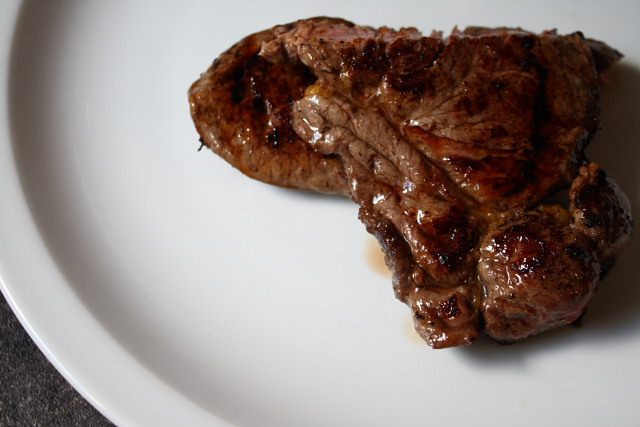
On holiday in France the other week, we spent a morning wandering round the weekly market in Chablis.  There was a little butcher’s van there, a chevaline boucher, a horse meat specialist.

I bought a small piece of faux fillet for a couple of Euros, took it home, seasoned it and cooked it.  The meat was sweet, very tender and tasty.  It had a slightly game like edge to it.  Different to beef, but not that dissimilar.  Very palatable, actually.

If I lived in France, I’d eat more.

Now, I realise at this point, there may be people – there will be people – who feel completely revolted by the very idea of eating a horse.  It simply isn’t the done thing in Britain and most of the English-speaking world.  It’s so far beyond ‘not the done thing’ that it’s verging on taboo.

Standing back from this and looking at it logically and dispassionately, the horror generated at the thought of eating horse doesn’t make sense when stacked against the British love of beef, pork, and – in particular – lamb.

Why is horse different?

It’s so different that we don’t even have a proper derivative word for it in the way that cow meat is beef or sheep meat is lamb or mutton.  Where it has been sold or marketed in English-speaking countries in the past, it’s been done so under the name ‘cheval meat’, from the French.

There’s some history and culture to this, as well as a dash of religion.

Pope Gregory III forbade the eating of horse meat in the eighth century, in response to the ritual slaughter and feasting practiced by Germanic and Celtic tribes in Northern Europe.  Iceland refused to convert to Christianity until the Catholic church bent the rules slightly and gave them a pass-out on the ‘no horse’ rule.

More this way…

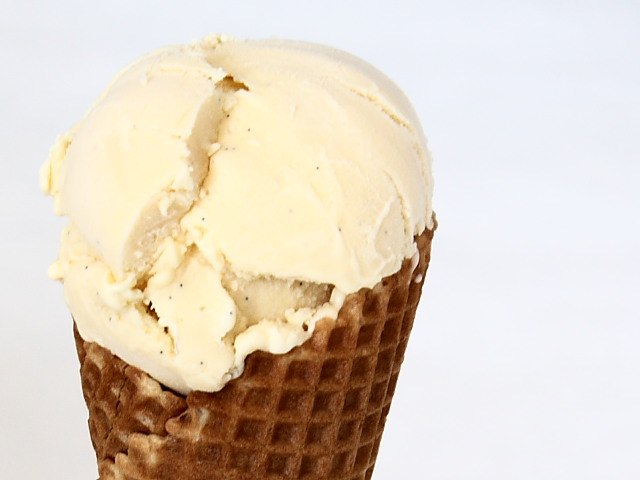
A proper vanilla ice cream

Food & drink
Classic vanilla ice cream

Vanilla ice cream.  It’s so boring it’s almost a joke, you’d think?

That maybe true of the mass-produced, bland, tasteless soft-scoop rubbish you get at any mediocre supermarket, but the real thing is something else altogether.

At it’s best – at it’s very best – vanilla is the king of ice creams, fantastic on its own, even better as a foil to just about any other dessert.

A scoop of proper vanilla ice cream alongside that apple pie?

Thankyou, I rest my case.

The really great thing about vanilla ice cream is that it’s pretty straightforward.  It’s an excellent place to start if you’re making ice cream for the first time, or for the first time in a very long time, as in my case.

A quick word on equipment.  Whilst it’s perfectly possible to make reasonable ice cream without a machine by simply beating the mixture a few times with a fork as it freezes, the result will be grainy.  Tasty, but a bit too rough.

You really do need a machine. This machine, is very similar to the one I’ve got…the bowl is pre-frozen overnight, and you simply pour the mixture into it and let a paddle powered by a little motor churn it around until you’ve got ice cream.

It’ll do the job.

Of course, if you plan on making ice cream regularly or on a more industrial scale, something like this might be more your thing, especially if your pockets are deep or your ice cream obsession large.

Anyway, back to business. This vanilla is a standard custard based ice cream, involving eggs, sugar and cream.

Warm 250ml of whole milk, 250ml of double cream 150g of sugar and a pinch of salt in a pan until hot, stirring to dissolve the sugar. Split a vanilla pod in half lengthways and scrape the seeds into the milk and cream. Add the rest of the vanilla pod itself for good measure.

The mixture will look…well, it’ll look a bit of a mess, actually.  The vanilla seeds are sticky, and the chances are, there’ll be big clumps floating around that refuse to disperse.  Don’t worry about this – the point of the exercise is to infuse the milk and cream with vanilla – all that debris will be suitably dealt with when its done its job.

Let the mixture steep for half an hour.

Separate six large eggs, and whisk the yolks together in bowl.  Set a sieve on top of the bowl and very slowly pour the vanilla infused milk and cream through the sieve, whisking all the time.

Hot milk plus egg yolks without whisking equals very milky scrambled eggs, so go slowly and keep it all moving.

More this way…

How to make a French baguette

Food & drink
How to make a French stick

There’s little more evocative of France, more French in itself, than the baguette.

The sight of people walking quickly home before breakfast, a still-warm baguette tucked firmly under their arm is a common one, such is the baguette’s place in French life.

British-style white-sliced bread stands no chance in France.

There’s tradition involved – no French meal is truly complete without bread – but above that, the baguette is a remarkably practical bread.  Tough, versatile, portable and with a place on just about every French table.

Making your own baguettes is fairly straightforward, especially if you’ve made the odd loaf or two before.  Some of the techniques are different, and you need a gentle hand to help to preserve that all-important open texture, but there’s no mystery to it.  The only real compromise you need to make is on the length…not many people have an oven big enough to bake a full-size baguette, so homemade versions have to be shorter out of necessity.

The only other word of caution is that this particular recipe takes ages to make.

Really.

It’s a two-day job, but the time is an important part of the method.

The recipe is from Peter Reinhart’s Artisan Breads Every Day, and it uses Reinhart’s cold fermentation method.  This means that the dough is allowed to develop very slowly overnight in the refrigerator, and it’s this period of slow growth that gives the finished bread a superb taste and wonderful lightness.

It’s worth the wait.

A mixer will also help, and cuts the mess and involved time in half.  The rest of the time is spent simply waiting.

Weigh 680g of strong white flour, 14g of salt, 7g of instant yeast and 454ml of lukewarm water into the mixer’s bowl, and mix on the lowest speed for a minute to draw the ingredients together into a rough dough.  Use the normal paddle attachment for this, and then switch to the dough hook and let the mixer ‘knead’ the dough on a medium-low setting for two more minutes.

Tip the dough onto a lightly floured work surface and knead by hand for a minute to finish.  The dough should be tacky, but not too wet or sticky.

You can, of course, do all of this by hand, a mixer just makes it easier.

Transfer the dough to a lightly oiled bowl and cover with cling film.  Refrigerate overnight.

The dough will stay in this state for up to four days, so there’s no rush in baking your finished bread.

More below…