On simplicity, or maple syrup & citrus marinated pork chops

Food politics
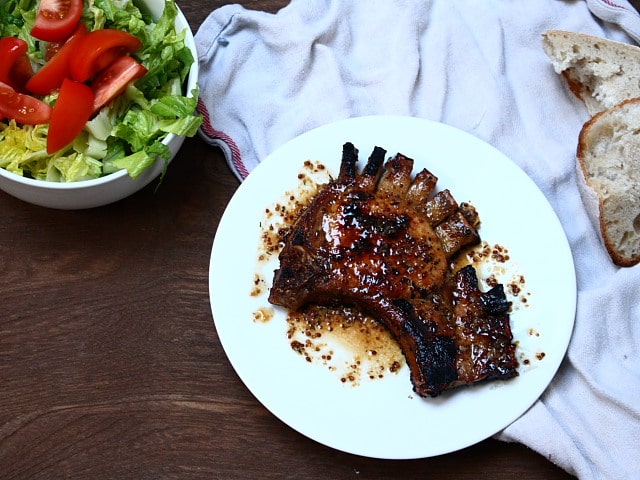
Citrus marinated pork chops, from the Ginger Pig, or why cooking should be simple.

I’ve been on my own this week. When that happens, I don’t cook a great deal, mainly because the routine disappears.

When the routine goes, so does my will to cook anything much at all. I get too easily distracted by Other Projects that eat up the evenings, other things that need doing. Time slips away until all I can be bothered cooking is an omelette or heating up something that’s been sat in the fridge for a day or two.

Most of the time, I quite enjoy that because it’s easy. It’s simple.

Cooking gets out of control very easily. Heston Blumenthal’s monumental Fat Duck Cookbook sits on my shelves…it’s a fascinating book, beautifully presented and packed with wit and knowledge. It has passion and enthusiasm, verve and excitement.

But do I cook from it?

No. Never.

Too complicated. I can do without thrice cooking chips using a grand’s worth of sous vide machine. That type of cooking has never appealed to me, with its crazy playfulness and over-worked procedures. The problem is the complicatedness of it all, the fiddliness, the self-conscious artifice.

The key to this recipe is a good pork chop. Find one with a nice, thick layer of fat, and cut into the rind and fat every centimetre or so to stop the chop curling up in the pan.

These cuts also let the marinade get to more surface area, which makes for better tasting fat.

You do eat the fat, right? It’s the best part…

I prefer simplicity in food. I prefer recipes that are stripped down, lean, where everything counts, where everything has a purpose and a reason.
More this way…

On why I bake bread

Food politics
On the spiritual art of making bread

I made a couple of sourdough loaves yesterday. They started out the night before in a mixing bowl, a ladleful of starter mixed with flour and water. More flour in the morning, salt, kneading, proving, shaping, baking.

24 hours of waiting went into those loaves. Slow food, indeed.

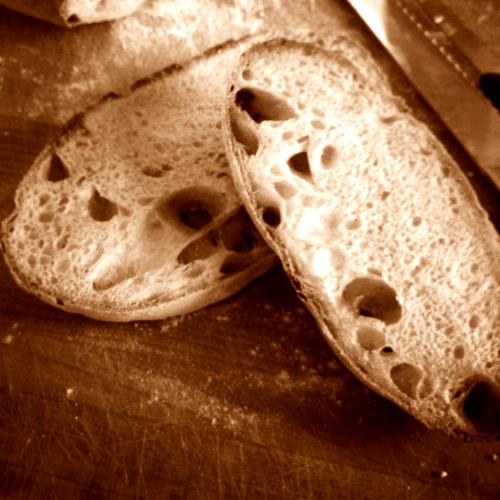
This batch was different from the last. Not as sour, and lighter, with a higher, softer crust and bigger holes, the Holy Grail of the sourdough baker…cutting that loaf open and finding big gaps made my breakfast.

It would have been easier to pop out to the shop for a loaf, even easier if I’d sent one of the kids to get it for me, but speed isn’t the reason I bake bread.

It might sound odd, but bread making is a kind of loose communion for me.  It’s a time I use to relax, to reflect.  There’s time involved, and structure, and action.  There’s space to think.  There’s time to just wait.  Waiting is under rated.  If it’s done with patience and purpose, it can be a means to many ends.  Lots of things get worked out when I wait for a bread to rise or as I work through some frustration or other by kneading, pushing, pulling a ball of dough for ten minutes or so.

More…

Hennickehammar’s toasted ginger cake

Food & drink
Hennickehammar’s toasted ginger cake, from Roast Figs, Sugar Snow, by Diana Henry

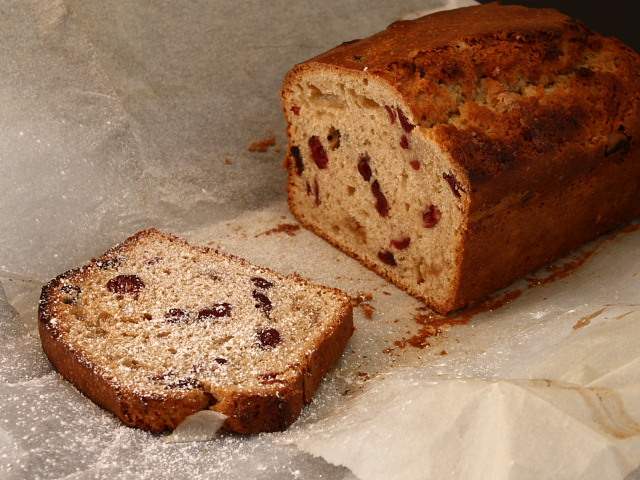
This cake is like a lighter version of a Christmas fruit cake…many of the same ingredients, but without the stodge and the months of waiting.  It has all the same punchiness and body, but none of the heaviness.

The usual medley of dried fruit is replaced by a single one – dried cranberries, plumped up in lemon juice for that sharp/sweet bite.

The recipe is from Diana Henry’s Roast Figs, Sugar Snow, and she notes that it originated from the Hennickehammar hotel in Filipstad, Sweden.  At the Hennickehammar, they serve slices of cake toasted lightly on each side, with a compote of lingonberries.
Dried cranberries are a wonderful thing…small and tart, bursting with sweetness, but with a hint of acidity to them.  Soaking them in the juice of a lemon helps to draw that acidity out, galvanise it and give it a bigger stage, so do just that with 125g of dried cranberries, bringing the lemon juice just to the boil, then letting the cranberries sit in the juice to absorb some of the liquid.

Whilst that’s happening, line the bottom of a 1kg loaf tin with greaseproof paper, and make sure the ends of the tin are properly greased with butter.

Getting the cake together is easy.  It’s just a case of mixing dry ingredients with wet.

More…

M’hanncha, or the Moroccan snake

Food & drink
Jamie Oliver’s M’hanncha, or the Moroccan Snake

There are times when I hit a blogging brick wall, where there’s nothing left to say, or where the ideas and half-posts won’t form themselves properly.

That happened this weekend, and after binning the third draft of something attempting to articulate what I think of minimum alcohol pricing (short answer: probably good, some reservations, could be collateral damage, but worth it. I’ll come back to that one), I decided that the best thing to do would be to actually cook something.

This Moroccan dessert had a little green Post-It note marking the page, so it must have caught my eye at some point, probably marked out for times such as this.  Quick, made with easily available ingredients, obviously photogenic – perfect Emergency Post fodder.

I can’t be the only one who thinks like this, so don’t judge me.

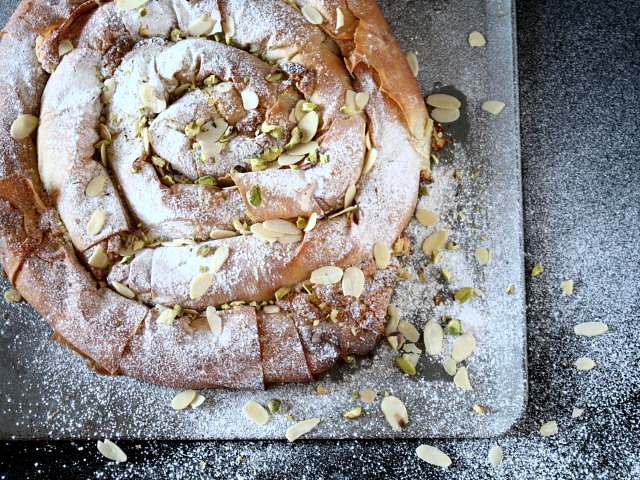
Anyway, m’hanncha, also known as ‘snake pie’ for fairly obvious reasons.  It’s like a big Cumberland sausage made with filo pastry and filled with almond and pistachio.

Cream together 375g each of butter and icing sugar until thoroughly combined, then carefully beat in three large eggs, one at a time.  I nearly chucked everything away at this point, but persevering with the gentle mixing started to bring the rather unpromising mess together into a vaguely loose textured mixture that perked up enormously when I added 375g of ground almonds.

Carry on mixing gently, and add four tablespoons of rose water, a heaped tablespoon of plain flour and the zest of a lemon and an orange.  As a last flourish, mix in 50g of roughly crushed pistachio nuts.

More here…

Mexican chorizo, standing by in the fridge

Food & drink
Mexican style chorizo, but Hugh Fearnley-Whittingstall

I’ve come close to attempting to make dry-cured sausages a couple of times, but never been able to get the right equipment together to make it happen.  The sticking point is controlling temperature and humidity properly, so that the sausage cures without developing any nasty surprises, like botulism.

To get good results safely, I’d need a curing chamber, but that’s another project.  A wholly achievable project, so maybe…maybe…

If you side-step dry-curing, there’s still plenty of charcuterie inspired things to do, and this Mexican version of chorizo is just one such thing.  It scores on several levels:

1) it’s quick to make

2) it keeps well, for at least a couple of weeks

3) it’s a flavour bomb, an instant hit of spice and heat that can be used as a background layer or up front as the star of the show.  Versatility is the key.

First, some background.  Mexican chorizo and the Spanish version are not the same thing, and need to be handled quite differently.

Spanish chorizo is a cured sausage…it’s ‘cooked’, so you can slice a piece off and eat it without any problem.

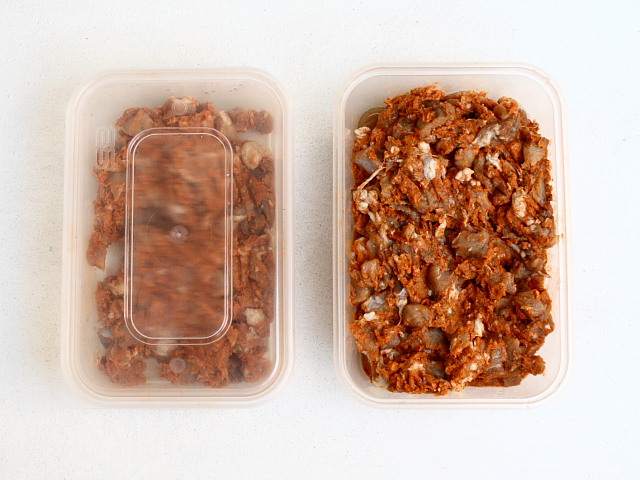
Mexican chorizo is raw and therefore needs cooking before eating.  Think of it like a heavily spiced and seasoned minced meat, and just think of what you could do with just such a heavily spiced and seasoned minced meat.  It’s sometimes stuffed into sausage skins for storage purposes, but more often, it just sits in a plastic container in the fridge until a spoonful or two are needed.

More…