Rabbit with mustard

Food & drink
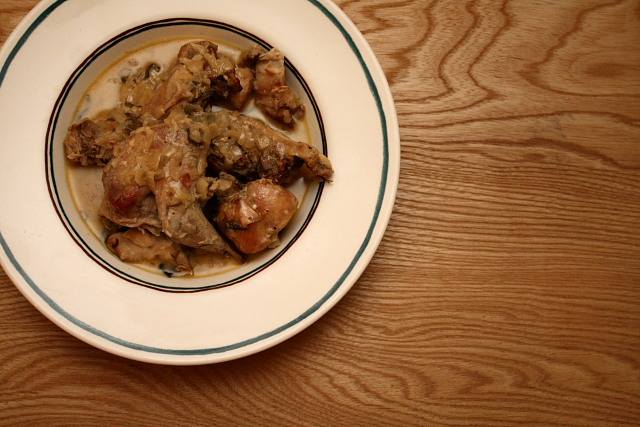
Rabbit with mustard, or lapin a la moutarde

Rabbit is vastly under-rated. It’s cheap, tasty, plentiful and versatile, but not very widely eaten.

This should change. Rabbit is a superb meat, and it deserves a wider audience because it fits well with the needs of the modern cook – it’s lean and healthy, it cooks quickly and doesn’t take a lot of preparation, and its reasonably easy to get ethically sourced rabbits.

There’s more on why rabbit-eating is a good idea here.

This is a very simple French dish of rabbit braised slowly and flavoured with mustard. It takes a while to cook, but none really to put together. It’s fast slow food, if you get my drift.

Start with a whole rabbit, which should cost about £3 or £4. A wild one is best, something shot by a farmer as a pest … the meat is tastier, and the farmer is happy. Win-win.

Joint the rabbit into serving pieces about an inch square. This involves a fair bit of surgery with a heavy kitchen knife or a cleaver. Just aim for nice meaty chunks.

Put the rabbit in a large bowl and add two tablespoons of Dijon mustard, stirring and massaging it into the meat.

More…

On fathers, daughters and Coca-Cola glazed ham

Food & drink
Fathers, daughters and Coca Cola glazed ham. A recipe for poaching gammon in Coke, with a honey and mustard glaze.

She wobbled and waved around, veering close to a parked car, then caught her balance and straightened the handlebars, and she was off … the first revolutions on another cyclist’s journey. Her first ride without stabilisers.

I remember doing the same thing, on a Raleigh Tomahawk – the smaller version of the famous Chopper – and I can still feel the fear and the thrill of those unsteady first outings, how it seemed so alien to be upright and moving on just those two thin wheels, but how it also felt so natural and full of possibility.

Soon, I was on a BMX, hurtling down snickets and alleys towards shoddily built ramps, dust and stone chips flying everywhere as chunky tyres bit into the track, launching skywards and flying for the eternity of a second before crashing into the dirt with a jolt and a thud. There were no helmets or pads, and how I survived is quite difficult to work out.

She’s more sedate.

She cycles up and down, turning in a wide arc at the end of the street, but I can see the same glee in her eyes as she speeds past, the same freedom shining through in a big, wide grin. Her turning circles become tighter as she discovers how to lean into the corner, as she learns the techniques and the tricks of riding a bike

There will be spills, there will be tumbles, bumps and bruises, and she’ll cry and wail, but she’ll pick the bike up every time and get back on, because that’s what she does, and that’s who she is.

This recipe sounds absurd. It’s a method of cooking gammon, or ham if you’re American, in Coca Cola. Step back from this and consider … Coke is little more than a very sugary liquid with overtones of caramel, vanilla and cinnamon. It’s a perfect poaching liquid for pork.

A whole gammon is probably north of 4kg in weight, and will feed a small army. I used a 2kg piece this time, which fed five for dinner, with leftovers for sandwiches on Sunday, Monday and Tuesday lunches. It goes a long way.

Place the gammon in  a large pan and cover it with Coke, about two litres should be enough. Top the Coke up with water if there isn’t quite enough. Add a whole peeled onion, a carrot and a stick of celery to add some extra flavour and bring the liquid to a gentle simmer. Cover the pan and poach for about thirty minutes per half kilogramme, plus another half an hour on top. If the gammon came straight from the fridge, add another ten minutes. More….

Mrs Atha’s coffee shop, Leeds

Eating out
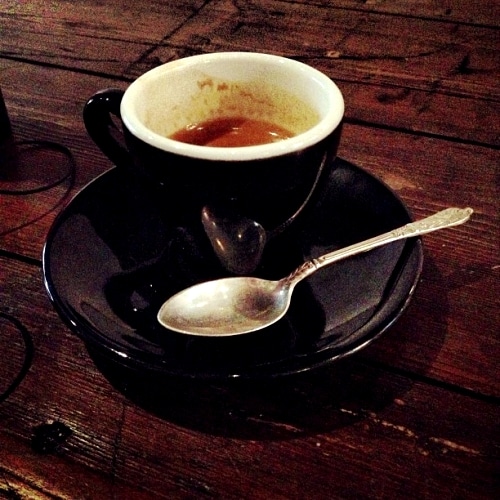
Mrs Atha’s independent coffee shop, Leeds

From absolutely nothing a few years ago, Leeds is now littered with top-rate independent coffee shops. The latest one is Mrs Atha’s a quirky little place on that odd, desolate feeling pedestrianised road behind House of Fraser.

They’re springing up all over the place, these indies, to such an extent that it’s possible to say that if you still buy coffee from Starbucks, Cafe Nero or – God forbid – Costa Coffee, you should be run out of town.

Mrs Atha’s brings a sliver of light to a dingy corner of Leeds. It’s a quirky little café, vintage styled with a keen eye on the needs of the people who’d be using it. It’s old-fashioned, yet bang up to date. Hard to describe, but the place looks gorgeous, decked out in dark wood, paintings, and bare brickwork, accessorised with vintage china. It must have cost a fortune, and the investment shows.

All the cosy vintageness sits perfectly with a clientèle who seemed to have brought half an Apple stores worth of gadgetry with them, and it’s all overseen by a pair of tattooed baristas, who on the considerable strength of my rich, thick crema topped and heart-stoppingly good espresso, seem to know their stuff. £1.40, if I remember correctly.

A perfect place for a spot of urban hipster watching.

Mrs Atha's Menu, Reviews, Photos, Location and Info - Zomato

Malai gosht, or lamb or mutton with cream

Food & drink
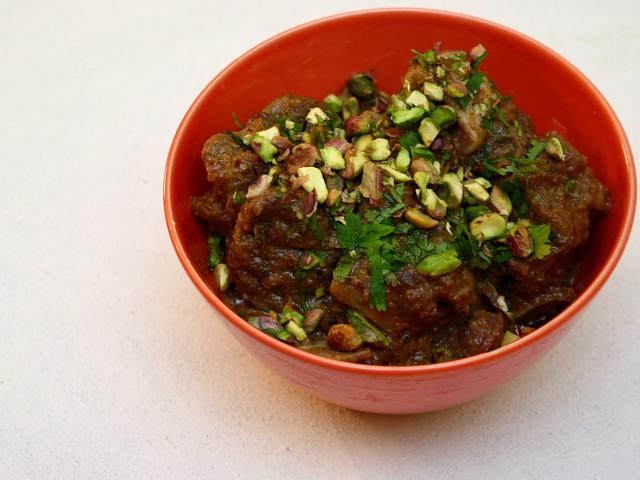
Lamb or mutton with cream, Malai Gosht, by Madhur Jaffrey

Curries made with cream have a richer, silkier feel than those made with yoghurt. The sauce tends to be reduced so that it clings to the meat, a thick coating of intensely flavoured cream encasing chunks of tender lamb or mutton.

This is a good curry for those who don’t really like the fire of a hotter curry, a madras or a vindaloo, for example. The cream tempers the heat, but there’s enough background spice there to give the meat some kick … the cream just takes the sting out of the chilli’s tail. It’s like wearing earplugs to a heavy metal gig – it’ll be loud enough for you to hear everything, but you won’t come out deaf.

This is a Madhur Jaffrey recipe (yes, I know, another one) and she makes it with boneless lamb shoulder. I used diced shoulder, but this time of mutton, and I left the bone in. It takes a little longer to cook, but the bone adds immeasurably to the flavour of the dish. It’s also trickier to eat, but such is the price of flavour.

The meat, whether lamb or mutton, needs marinading first, so put about  a kilo of meat into a large bowl and add 350ml of whipping cream, a teaspoon of cayenne pepper, two tablespoons of finely grated ginger, six cloves of garlic, crushed, and a teaspoon and a half of salt. Mix together well, cover and refrigerate for at least four hours or preferably overnight.

More…

Baklava

Food & drink
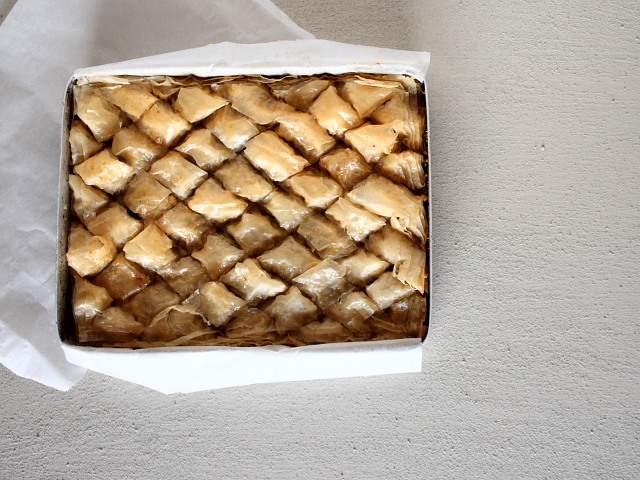
Turkish baklava – a rich dessert of filo pastry, nuts and sugar syrup.

Leanne Kitchen’s Turkey has a piece in it about baklava, but no recipe.

Kitchen declined to include one, because baklava is one of those things that’s best done professionally, by people who make it all the time, using those generations-old recipes and techniques that will live forever.

Reading that did give me pause for thought, but I’d had a piece of quite incredible baklava the other week at the Shipley Slouch, made by a local baker who’d also blogged the recipe.

So, I’m left in a quandary – the closest thing to a direct instruction not to go near embedded in one of the best cookbooks I’ve had the good fortune to read in the last couple of years, and a barnstorming recipe that I know must be good, because I’ve tasted the results already.

What to do?

Probably best to step away and make something else, but … what the hell. Here goes …

Baklava is a sweet pastry dessert of Turkish origin, rich with butter and sugar, loaded with nuts. It’s very, very tasty – sticky, crunchy, and heady with the pungency of cinnamon and rose water. Served in small diamonds, it’s unsurpassed next to a cup of strong, black coffee.

Baklava is relatively straightforward to make, more of an assembly job than anything else, but it takes some time and needs some care and attention.

First, some prep.

Line a shallow tin with greaseproof paper and grease the sides with butter – the dimensions of the tin aren’t that important, but mine was about 25cm by 30cm and three or so centimetres deep. It’s an old tin, inherited from my Grandma and probably originating in the fifties at some point.

The moral of this little digression?

Buy the best kit you can afford, and it’ll last you a lifetime, and maybe even your grandchildren’s lifetimes, too.

Cheers, Grandma.

More…