How to catch, clean and cook garden snails

Food & drink, Food politics
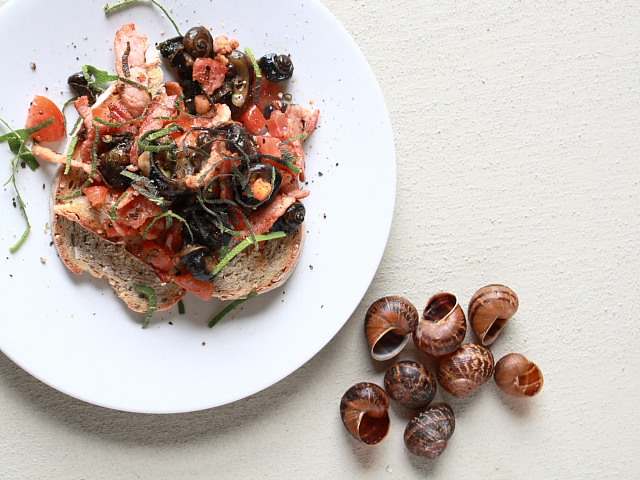
How to cook garden snails

The first thing to say about my very small attempt to farm garden snails for culinary purposes is that its been controversial.

“It’s worse than the live crabs in the sink incident“, Jenny said, “but not as bad as the pig’s head in the fridge.” Personally, I think it’s far worse than the pig head incident…I didn’t have to kill the pig, after all.

This little experiment seemed to catch the imagination, provoking reactions ranging from horror to intrigue, long facebook conversations about the ethics of eating things like snails, and the formation of an official pressure group, the Snail Liberation Front, bent on saving said snails from the pot.

Like many other pressure groups, it failed, but it did produce some hastily-pushed-through-our-door posters with remarkably good drawings of snails and the epic strap line “only Tories eat snails”, which I must admit made me pause for a moment and consider releasing my prey.

So, these snails…

All snails in Britain are edible. They’re essentially the same creatures that the French , Spanish and Italians devour by the tonne. The small, colourful ones aren’t worth the bother, and Roman snail, predominant in the South and South West are protected, so that leaves helix aspersa, the common garden snail.

It’s not as large as the farmed French varieties, but it’s a reasonable size for eating, and extremely plentiful, as anybody with an allotment will know.

If you set aside the emotion of it all, it makes perfect sense to eat snails. Why kill them with poison or the sharp edge of a spade when you can use them properly, for food?

It’s a far more ethical and sustainable approach.

It make s perfect, logical sense, but there’s a cultural angle to the whole act of eating a snail that simply revolts many British people, which is a shame, because snails are very good to eat indeed.

The French know this already, of course.

More this way…

Pinche Pinche, Chapel Allerton, Leeds

Eating out
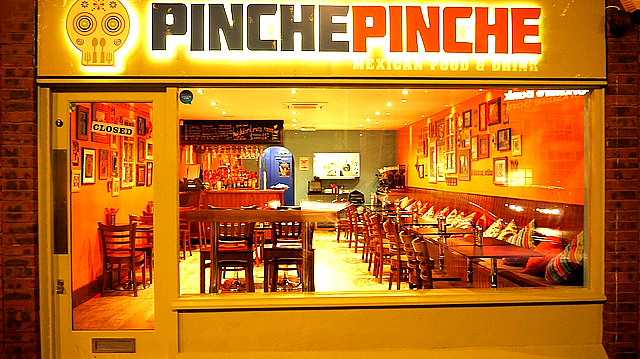
Pinche Pinche Mexican Restaurant, Chapel Allerton, leeds


You know those times when a restaurant creates a bit of a buzz about it?  How it gets mentioned often on twitter and facebook and blogged about endlessly?

That makes me nervous.

There are plenty of places that don’t live up to their hype, plenty of places that just have good PR people cooking up a social media storm for them, but which don’t deliver in the dining room.

This made me a little apprehensive about Pinche Pinche in Chapel Allerton.  All of that beguiling buzz is there, people speaking and writing about it in gushing terms.  Could it just be yet another façade masking an insubstantial attempt at knocking out the next big regional cuisine somewhere in Leeds?

Happily not.

I couldn’t find anybody with a bad thing to say about it, and that made me suspicious, but now I understand why.  Pinche Pinche is that rare restaurant that lives up to its hype. More…

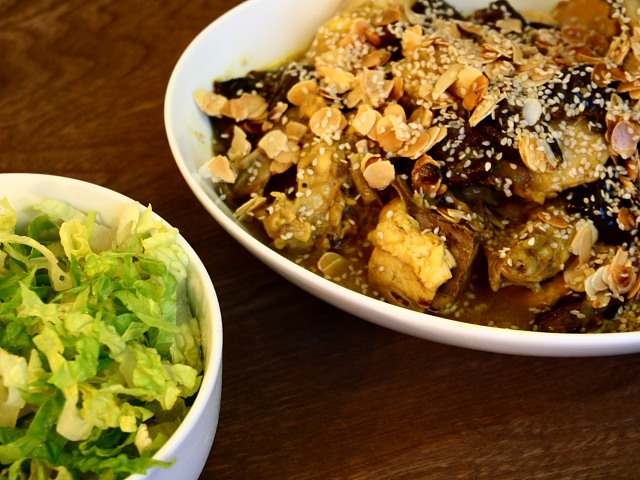
Tajine djaj bil assel, or chicken, prune and honey tajine

Food & drink
Chicken, prune and honey tagine

Our go-to recipe for chicken stew type meals is normally a curry of some description, something from the sub-continent, or maybe South-East Asia, packed with garlic, ginger and spices.

I normally get quite fired up by the idea of making these types of  dish, then realise that the list of ingredients is a foot long and the spices need to be roasted in a dry pan, the garlic and ginger needs to be obliterated in a food processor, this and that need to be cooked for ten minutes each…  Suddenly, it turns into a performance instead of a quick dinner.

There’s no way around that for that type of food…it needs an investment of time and effort to make it happen.

This tajine, a Moroccan staple, is slightly different.  It’s one pot cooking at its finest…just drop all the ingredients in a big pan, cover with water and let time and heat work its culinary magic.

Start with a chicken, jointed up into serving pieces.  This means separating the drumsticks from the thighs, breaking the wings in two and cutting the breast into three chunks.  I left the breast on the bone and sliced straight through it with a heavy knife.  Bones in a slow cooked dish like this are always a bonus.

More this way….

North African Cookery, Arto Der Haroutunian

Books
North African Cookery, Arto Der Haroutunian

The first thing that struck me about this book, covering the food of North Africa, was its complete lack of pictures. Apart from the odd very instructive illustration here and there, there are no pictures at all, no photos of celebrity chefs mugging for the camera, no artfully arranged plates of food, no soft focus shots of the Sahara.

Nothing.

My first reaction was that the lack of illustration meant that it was going to be hard work…serious reading, serious cooking. That’s true, to an extent, but Arto Der Hartunian’s North African Cookery quickly won me over with its quiet authority and brilliantly contextualised recipes.

It reminds me a little of Claudia Roden’s magnificent The Book of Jewish Food, which is a masterclass in associating food with culture, people and place. North African Cookery has the same keen sense of history and context, an understanding of what makes food important to the people who cook it and eat it. It appreciated that food is more than mere nourishment, it’s the stuff of life itself.

North African food stretches far beyond the Moroccan standards that might be familiar, and this book does a great job of encompassing the rest of the Maghreb, the coastal Mediterranean stretch covering Morocco, Algeria, Tunisia and Libya.

More…

Pizzeria da Remo, Rome

Eating out
Pizzeria da Remo, Testaccio, Rome, Italy

Remember the other week I wrote about trekking all over Rome to find a pizzeria late at night?

The same thing happened the next evening, too, when we yomped across the city to a closed-down restaurant, complete with tumbleweed rolling past the door.

Luckily, I’d idly canvassed some twitter opinion on decent restaurants when I was still within range of the hotel’s wi-fi and the collective, crowd-sourced wisdom of the masses threw out a name that kept being repeated.

“Best pizza in Rome”, they tweeted,” authentic”, “far enough away from the tourist trail to make it the real deal”. So, a quick look at the map and a happy dawning realisation that it was just over the Tiber in Testaccio and off we set for Pizzeria da Remo.

It’s a bit of a tired cliché, but local people in a restaurant is normally a good sign, and da Remo was packed with Italians…couples, families, big groups of friends, all with seemingly enormous appetites. I know that Italians generally think that a proper meal consists of at least five courses, but the amount of food the tables around us seemed to be eating was mammoth.

And what food it was.

More below…