Toasted coconut ice cream, and a brand-new scoop

Food & drink, Kitchen gear
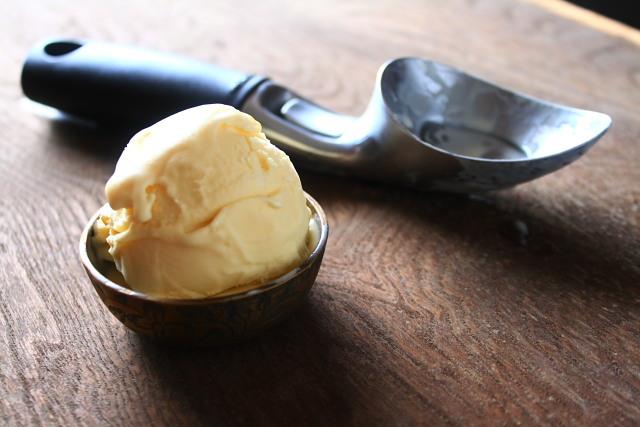
Toasted coconut ice cream

The quest for ever weirder ice cream flavours continues …

After the olive oil ice cream from the other week, we’ve now got coconut, and it’s actually quite good – coconut intensified through a little gentle roasting to bring out its essential nuttiness, then used as an infusion in a standard ice cream base. Couldn’t be easier, and helped me to use up a lingering half-empty bag of desiccated coconut. Double win!

The first thing to do is toast the coconut. This is an essential step because it helps to concentrate the coconut’s flavour, and gives it another dimension of smokey, woody, nutty tastes, which are perfect in an ice cream like this. To do the actual toasting, you’ve got a couple of choices, each loaded with the risk of over-toasting … this is one of those times where total concentration and attention are needed to catch that split second between ‘perfectly done’ and ‘cremated’. It’s just like making croutons.

Method One is the easiest – just spread 70g of unsweetened desiccated coconut on a baking tray and roast in the oven at 175c for about five to eight minutes, until it turns a rich, golden brown colour. You’ll need to take the tray out of the oven and turn the coconut a few times to make sure it browns evenly.

Method Two is altogether better – use a big frying pan over a medium heat and toast and stir the coconut until the magic state of golden-ness is reached.

Never stop stirring. Never stop watching.

Never.

More…

The rise of the North’s newest brewery – Northern Monk Brew Co.

Food politics
Bradford’s newest brewery – Northern Monk Brew Co.

“It would be nice to be one of the people helping to put Bradford back on the map for positive reasons”, says Russell Bisset, founder, along with brewer David Bishop, of the Northern Monk Brew Co., the city’s latest brewery, and one set to continue a rich history of brewing in the region.

“Our sense of place and the ‘Northernness’ of our identity is an integral part of what we’re trying to achieve”, he continues, describing how his fledgling brewery started to shape and take inspiration from the lands around it. The North is a rich hunting ground for anybody interested in beer, with a clutch of first-rate and inspirational breweries producing some stunning beers across the region, and The Northern Monk Brew Co. continues this tradition with their first beer, New World IPA. It’s a punchy, strident brew packed with the flavours of the New World and wrapped in some mysterious and enigmatic branding that revolves around the hooded profile of a monk, backed against beautiful black and white shots of the best of Yorkshire’s riches of scenery.

It’s a compelling and convincing package,  but Northern Monk is more than just good branding and a decent beer. [continue reading…]

Moroccan-style sardines

Food & drink
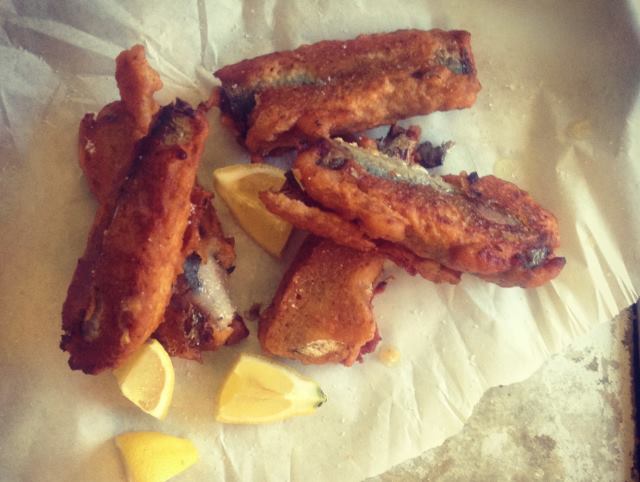
Battered sardines

The only way I’ve ever cooked sardines is by grilling them, throwing salt at them and then squeezing liberal amounts of lemon juice over the charred skins. It’s a classic meal that calls for fingers and creates mess.

This is a slight alternative, with a Moroccan tinge, but there’ll still be a mess, because the best way to eat anything like this is with your hands. Don’t even bother with a knife and fork, because you’ll only end up tearing the fish apart anyway. Save a little washing up.

The trick with this recipe is the secret of the batter. It’s a fifty/fifty mix of plain and semolina flour … this is important, because he semolina flour gives the batter a distinct crunch. It isn’t unusual to add semolina to a bread dough to give the crust the same extra crispness, and it’s often used as the dusting flour for pizza bases for just the same reason.

More …

Cold off the press – olive oil ice cream

Food & drink
How to make ice cream with olive oil

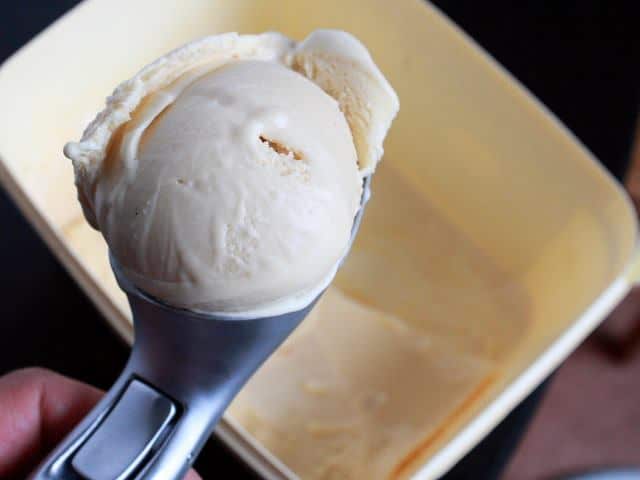
There’s no getting away from it, so I might as well just get this over with straight away – olive oil in an ice cream sounds downright odd. Perhaps it’s the idea of an oily dessert, or maybe the combination of oil and cream that does it, but there’s something about the very idea of making an ice cream with olive oil in it that just doesn’t sit well.

That’s an emotional and unfounded view, of course, and the logical part of me was prepared to accept that a good, fruity olive oil might just work for long enough for me to actually try to make it.

The result is a triumph – there isn’t the slightest hint of greasiness to the ice cream at all, just a smooth creaminess with a punchy flavour, mild, savoury notes jabbing through the rich, creamy base. There’s a slight grassy flavour that sets this ice cream apart from the rest.

Often, an ice cream is just something to serve next to something else that’s supposed to be better, but this is the other way round – the ice cream is the star of the show, and anything served with it a mere supporting partner. Keep it simple, in that case, nothing more than some fruit or berries, with a little sea salt cracked over the top of the ice cream to bring out the pepperiness of the oil.  More …

Cicchetti, and Other Small Italian Dishes to Share, Lindy Wildsmith & Valentina Harris

Books
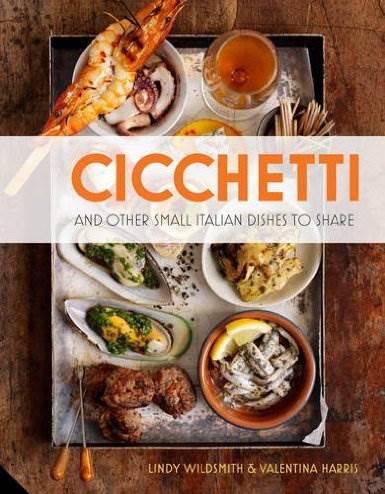
Cicchetti, and Other Small Italian Dishes to Share, Lindy Wildsmith & Valentina Harris book review

There are dozens of Italian cookbooks on my shelves.

It’s a cuisine I return to time and time again, because it’s accessible, exciting and packed with flavour. Its reliance on good ingredients, cooked simply, cooked well suits my own approach to food.

Most of all, the food of Italy never stops surprising me – the twists, turns, variations and intricacies of it are seemingly endless. There’s always something new to try, something new to experience.

And here’s another angle – cicchetti, the Venetian tradition of small plates or dishes, a kind of Italian tapas.

Lindy Wildsmith and Valentina Harris’ book, Cicchetti has two approaches, focusing firstly on the cuisine of the city of Venice and the region around, and secondly on the spread of similar dishes, called spuntini, piccoli cibi or stuzzichini elsewhere, across the rest of Italy.

Cicchetti is a collection of small plates characteristic of this style of Italian food, and includes recipes for many types of dishes, ranging from simply served hard-boiled eggs through to stews of tripe and porcini, fritters of cod, Tuscan paté and crostini loaded with chopped liver. There’s huge variety here, but the key theme is one of simplicity – many recipes are short, easy, quick to make, with an emphasis on the quality of the ingredients and their seasonality, and getting the best out of the food by, well, not overdoing the cooking.

It’s a good philosophy, a solid approach to food, and one that encourages restraint and lets the food speak for itself.

This isn’t to say that Wildsmith and Harris’ book is some sort of pre-school canter around Italian food … far from it. Quite the opposite. This is a book with a tremendous amount of passion for the cuisine it celebrates, a book that’s been carefully thought through and lovingly put together.

Wildsmith’s first half focuses exclusively on cicchetti from Venice, Harris’ second half builds on this base and expands it across the rest of the country, capturing select examples of similar types of food from the far corners of Italy. This approach shows how a style of food develops and emerges as the signature of a particular place, and how that speciality is reflected across the rest of the land. Venice is merely a place where the idea of small plates has taken hold and been distilled to an art form.

Cicchetti is one of those books that fills a gap. It’s full of good little ideas, ways to pair flavours and textures together. It isn’t fussy, or over-worked, it’s just a passionate cook book that knows its niche and seeks to celebrate it.

Hugely enjoyable.