Rhubarb, ginger and chilli pickle

Food & drink
Rhubarb, ginger and chilli pickle

This time of year always brings the first glut of the season – rhubarb.

One day, there’s none, but the next, there are vast parasols shading slender stems rocketing skywards, growing thicker and darker day by day. Rhubarb is the most hardy and forgiving of vegetables, and it is a vegetable and not a fruit, although unusual in the fact that it’s normally eaten with sugar. It’ll survive and thrive in the most unpromising of spots – mine lives in a damp North-facing bed overshadowed by a four-story house, yet each year brings more stems than the one before.

My care regime of transferring a couple of spadefuls of compost from the bin next to it to the spent rhubarb crown every autumn seems to work.

From a cooking perspective, though, it can all get a little … samey. There’s only so many rhubarb crumbles one family can tolerate before somebody sidles up to me and says something like “yeah, about those rhubarb crumbles, Dad … ”

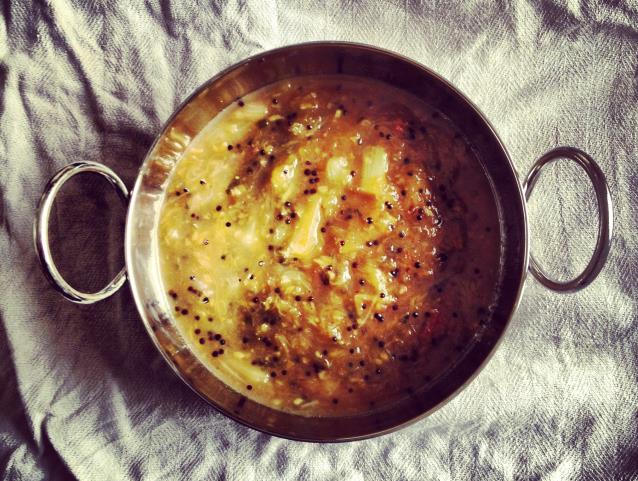
This quick little recipe is a great alternative. It’s a simple Asian inspired pickle, similar to the ones that you’ll find on the pickle tray at any decent Indian restaurant, ready to be smothered on shards of poppadom. The main difference is that it uses rhubarb as its base ingredient.
More…

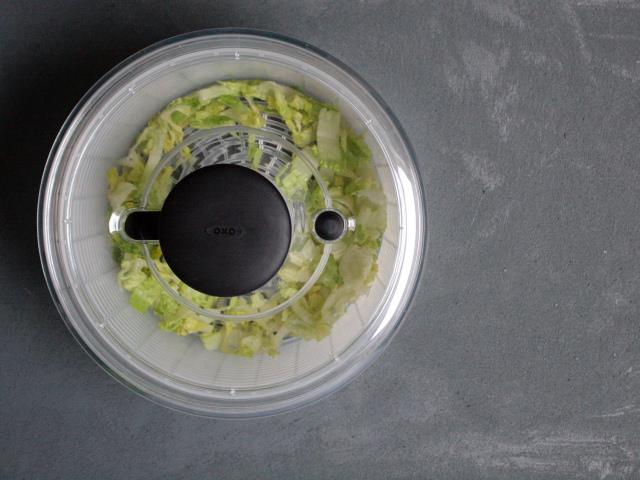
OXO’s Good Grips Salad Spinner

Kitchen gear
OXO Good Grips Salad Spinner Review

What is it?

It’s a salad spinner.

Salad spinners are a waste of time. Why bother?

I used to think that, too, and I’ve long been a fan of collecting wet salad leaves up in a tea towel and spinning them round like a banshee, stood outside the back door. The neighbour’s loved that.

A salad spinner is a much more civilised way of drying wet lettuce properly.

Alright, but why this one?

My previous experience of a salad spinner was a bit of a let down, mainly because it came from IKEA. This one is different, though, in a couple of ways.

It’s pretty well made, but more importantly, it isn’t a one-trick pony. The basket doubles up as a handy and quite capacious colander, as well as serving as the internal spinny thing that actually does the work.

More….

Jerusalem artichoke and chicken pie

Food & drink
Jerusalem artichoke and chicken pie

I was told that Jerusalem artichokes were so easy to grow that it’d be hard to get rid of them once they went into the ground.

“They’ll spread like weeds”, said the old bloke on the plot next door.

I dug the tubers in early one morning, the ground wet and the mist clinging tightly to the handle of the spade as its blade cut through the cold earth, little jewels slowly disappearing in perfectly spaced formation under the surface.

I expected success, but I got nothing.

I later wrote the words ‘Jerusalem artichoke’ on the bottom of the long  list of ‘Things That Failed, Failed Badly’ underneath peas, beetroot and sweetcorn. Just another nail in the coffin of my allotmenteering career.

Don’t let this sorry tale of horticultural disaster put you off Jerusalem artichokes, although I’d understand if it put you off the idea of keeping an allotment.

It did for me.

Jerusalem artichokes, however, are superb – nutty, earthy and substantial, they give a stew or a pie a certain backbone and a unique taste, almost peat-like. They’re strange little vegetables, all mis-shapen and inelegant, difficult and fiddly to peel and quick to discolour. They have nothing at all to do with Jerusalem, and  aren’t artichokes at all – they’re actually the tuber from a species of sunflower.

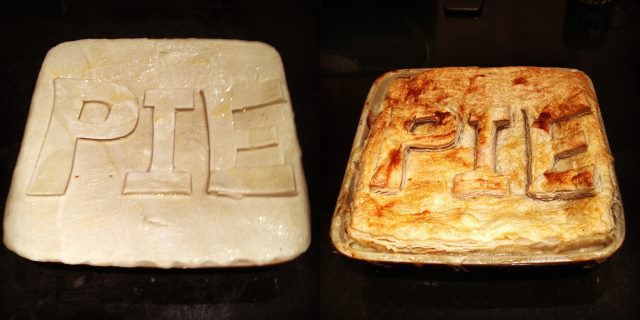
Pairing Jerusalem artichokes with chicken is a very good idea, and this Sophie Grigson pie does exactly that. It’s become a regular fixture in our kitchen because it’s easy to put together, can be prepared in advance and because the filling freezes reasonably well, so there’s a fantastic pie on hand at all times bar an overnight defrost.

More pie…

How to preserve lemons

Food & drink
How to preserve lemons

I have this theory about people who cook.

It involves their cupboards.

I think that you can tell if somebody is serious about cooking, and I mean really serious, after a quick rummage through their kitchen cupboard.

That might sound obvious, but it’s not the weird and the wonderful I’m looking for. Everybody has barely used bottles of this and that kicking around, leftover from some single-shot experiment. Anybody who needs a barely used bottle of saké knows where to come.

I’d look for the stuff that gets used, the things that form the staples of that particular kitchen, the backbone.

Here, that means things like coriander and cumin, garlic, ginger, soy sauce, both light and dark, paprika, chilli, garam masala, turmeric, olive oil, Oloroso sherry, Lea & Perrins …

Everybody has a different list, and mine fluctuates all the time in a sort of Premier League fashion. Sometimes, there are promotions, other times, there are relegations. Something will emerge that I’ll use for a little while then forget about, a passing fad, a fashion. Other times, something takes a firmer grasp and claims a permanent place in the cupboard.

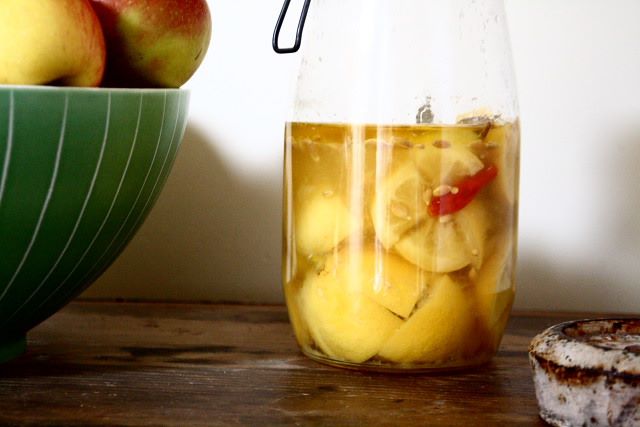
That’s happened with these wonderful and versatile preserved lemons. So useful, so easy.

More…

How to bake French-style brioche bread

Food & drink
French brioche bread

Baking bread.

It sneaks up on you.

It starts slowly, just a little experiment, maybe a curious attempt at a simple loaf. Nothing out of the ordinary, just flour, salt, yeast, water and time.

You find that it works. It works better than you could ever dare believe it’d work.

Your bread tastes real, substantial, honest. It tastes of your toil, of every stretch you pummeled into the dough, every second you waited for it to rise, of the care you took in turning it out onto a hot baking sheet.

It tastes like bread should taste, how it’s always tasted, how it always will taste.

There’s nothing better than those first loaves. They won’t be technically perfect, but that doesn’t matter … it’s your bread, and it’s the most important loaf in the world because it’s the loaf that turned you into a baker.

Soon, there’ll be more. Pizza, focaccia, naan, croissants, batons, baguettes, bread packed with seeds, with apples, with butter.

This is a good place to start to move on from a basic white bloomer because it uses substantially the same techniques, but with some added ingredients and twists that make it something entirely different, entirely authentic and wholly delicious.

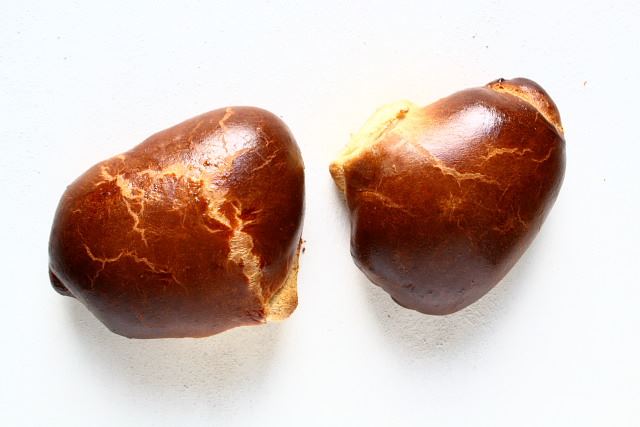
Brioche is a classic French loaf, a rich bread packed with butter, milk and eggs, and it’s deceptively easy to make.  More…