It’s interesting, isn’t it, how things come together?
Do you find sometimes that a particular thing you did a long time ago comes back around in a spectacularly unsuspecting way?
This happens to me often.
At work, we call it ‘planting seeds’, an odd comment or email dropped here or there that’s designed to give somebody an idea, an idea that they might just build on, because it’s their idea, and everybody knows that their own ideas are the best ones, and the ones most likely to become a reality. Right?
There’s often a calculation involved in planting a seed, one that seeks to engineer a certain outcome, but other times, it’s just luck, just the way things unfold, the way they develop and grow.
Here’s an example.
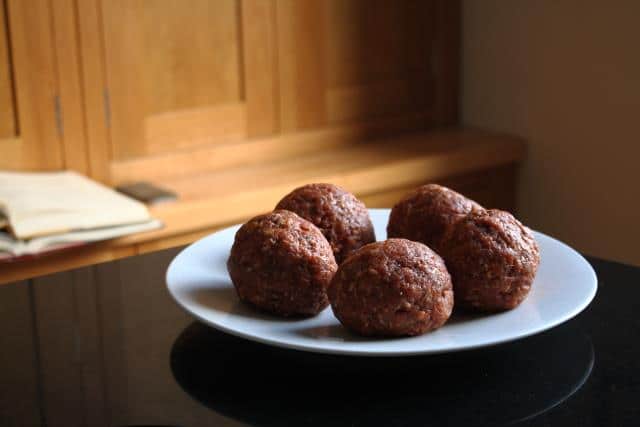
Way back in March 2012, I wrote about a recipe for a Mexican-style chorizo. Mexican chorizo is very different from the Spanish sausages we’re more familiar with … for a start, it isn’t a sausage, just a heavily spiced pork meat paste that’s used as a seasoning or base ingredient in many dishes. It’s rich with paprika and chilli, coriander and thyme, and it’s the sort of thing that’s supposed to just sit in the fridge until it’s needed to add a kick to something or other. I found it particularly good fried in small pieces and stuffed into an omelette.
More…
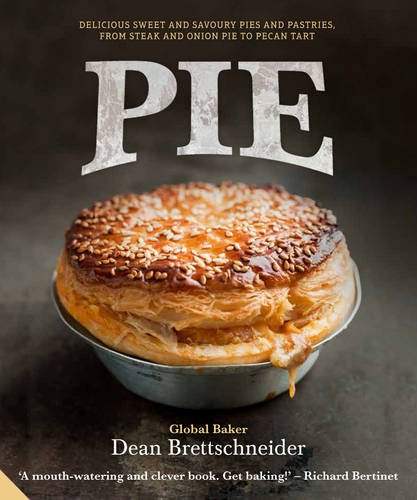
A book about pies, perhaps?
Absolutely. Quite an easy guess. It’s written by Global Baker Dean Brettschneider.
“Global Baker”?
I think that just means that Dean’s from New Zealand. He’s got some pedigree, though, and has lived and worked in places as diverse as China and Denmark.
That sounds suspiciously like a ‘brand’ …
Maybe so, but this book is very good indeed. It focuses entirely on things with a crust, and really, at this time of year, what’s not to like?

I read a lot of cookbooks. There are a couple of hundred on the shelves over there in the dining room, and I’m starting to get to the point where I don’t think many more will be, shall we say, welcome. I can tell a good cookbook from a bad one almost immediately … that combination of design, presentation and mood working together and hitting a certain note. Many fail, and scanning those shelves, I could, if I were less gentlemanly, pick out a couple of real howlers, but when the writer of a cookbook gets it right, it’s a joyous thing.
Cookbooks are still a vital resource. Searching the Internet for recipes doesn’t compare to picking books off a shelf and searching their pages, some falling open at well-used spots, their pages splattered with the remains of meals past. Each time a new cookbook lands in my kitchen, I secretly hope that it’ll turn into one of those books that becomes part of the fabric of the place.
Daylesford’s A Love for Food has that potential. It’s the sort of book that, when I picked it up and started flicking through the pages, I caught myself thinking “yeah, I’m cooking that … and that … and that” over and over again.
I was quite surprised by that, if I’m absolutely frank. This book had the feel of a marketing wheeze to support a wider business, something of an add-on to pad out a bigger enterprise. Daylesford is an organic farm in Gloucestershire that’s branched out, River Cottage-style, into bread, cheese production, meat and veg, with farm shops and cafes in trendy spots like Selfridges, Notting Hill and even Japan. You can buy Daylesford’s products online, from Ocado, naturally.
More…
Nose-to-tail eating is everywhere, right now.
The idea – and it’s a very good idea indeed – is to use every part of the animal for something useful. It’s an idea that rests on the basis that something like a pig really doesn’t have any bad bits at all, and it challenges whatever preconceived notions we might have about what ‘meat’ should look like, or how it should be butchered, or which parts are prime, and which less so.
Much of this preconception has been hammered into us by increased consumerism and a volume approach to selling – it’s the prime bits that people want, so the rest doesn’t even get stocked in many supermarkets, with their fridges full of recognisable, sanitised, safe cuts.
There are some exceptions to this general rule, though, and it’s worth foraging around Morrisons’ meat aisles in particular every once in a while for odd bits of offal … ox heart and the like is regularly for sale next to the choice cuts, and I’ve used that to bulk out a standard casserole of beef in whatever stout or porter I can get my hands on that’s not Guinness to great effect, and without anybody noticing.
There’s good reason for this seemingly enlightened approach – Morrisons own their own meat supply chain, from the ground up, so they’re in control right the way through the process, and that means getting the best value they can from the animals they rear.
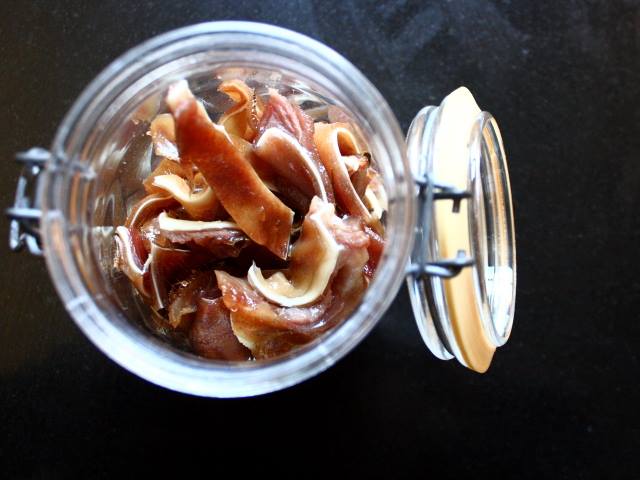
Maybe pig’s ears are a step too far for the local supermarket – these came from a butcher on the market, who I’m convinced thought I was going to feed them to a dog, rather than eat them myself. Cheap, too – about 50p each, I think.
More…
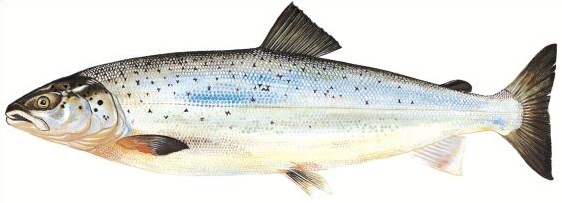
Next time you’re at the supermarket, have a look at the fish counter, or gaze into the plastic wrapped cartons. Chances are, there’ll be a few different species of white fish, some trout and lots and lots of salmon.
There’s a reason for that. Salmon is relatively affordable, in fish terms, it’s very versatile, and it tastes good. People like salmon, and add in the fact that it’s packed with the right types of fatty acids and vitamins, and it seems to be the perfect food.
In many ways, it is. It’s a good alternative to many of the more endangered fish species, and it lends itself fairly well to farming – although not perfectly – and the health benefits are fairly clear. There’s a lot of poor quality out there, though, and you need to be careful about what you’re buying. The cheap stuff is paler in colour, and has more defined lines of fat. Fillets tend to look, well, skinnier. Good quality salmon is firmer of flesh, darker, and should glisten with freshness.
The provenance of the fish is important. Scottish or Norwegian are good bets. Norwegian salmon, in particular, bred in the cold, clear waters of Scandinavia is a superb product.
More…
