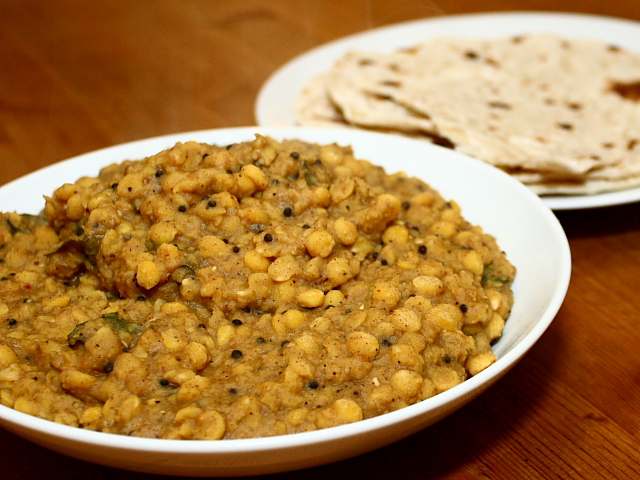
Toor dhal, or tasty lentils, if that’s possible

Food & drink
Toor dhal

Lentils!

The world’s most underwhelming pulse.

Universally cooked to near oblivion and ridiculed as sub-standard hippy/student fare, the humble lentil has a bad reputation, but cook them so that there’s still a tiny bite to them, and then hit them with a pile of spices and it’s a different story.

If any food is a blank canvas, it’s the lentil.

This dhal is a massive jolt of flavour, and it shows just how good the humble lentil can be.

The recipe is in two halves – cooking the lentils and preparing the spices – both of which you can do at once.

Cooking lentils takes time, and it’s important that you do it properly, because improperly cooked lentils could make you ill.

Wash 250g of yellow toor lentils or chana dhal, cover with plenty of cold water, add a whole tomato and two halved cloves of garlic and bring to the boil. Toor lentils and chana dhal don’t need soaking, but check the packet and cook them as directed. Toor lentils should take about half an hour, chana dhal maybe another ten minutes longer.

When the lentils come to the boil, you’ll need to skim them. There will be a fair amount of foam that needs to be scooped up and chucked away. It’s a very satisfying job.

While the lentils are cooking, get the spices ready.
More this way…

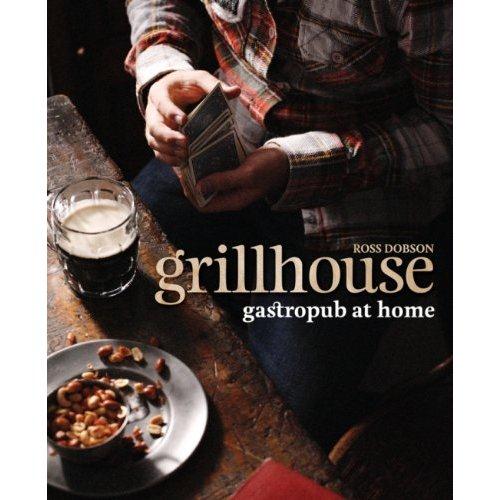
Grillhouse: Gastropub at Home, Ross Dobson

Books
Grillhouse: Gastropub at Home – Ross Dobson book review

There’s a rather apologetic introduction to Ross Dobson’s book, Grillhouse, where the author dances around the fact that much of what’s to come feels a little retro and old-fashioned.  Dobson argues that “we’ve never stopped enjoying classic, simple, hearty food.  It may have been a while since it graced the covers of the foodie magazines but did people ever stop wanting to have a proper prawn cocktail, a perfectly roasted chicken or a juicy pepper steak?”
I see Dobson’s point, but I’d argue over the prawn cocktail. Nobody likes a prawn cocktail, do they?

It’s interesting that Dobson’s introduction has a touch of defensiveness about it, because the rest of the book is a decent collection of food.  It stumbles in a couple of places, but at its heart it’s a good book, just with a slightly too retro feel about it.

While much of the food could have been lifted from any era, the book as a whole has the feel of the early nineties about it, so wedded is it to the gastropub revolution of that time.  The very idea of a ‘gastropub’ itself seems a little retro these days, but remember that in about 1990, pubs didn’t serve anything close to decent food.  The first pubs to do so were viewed with some suspicion, before their blueprint of traditional food served in a relaxed setting caught on and was copied all over the country.

These days, it’s not unusual to eat fairly well in a pub, and this ubiquity of experience leaves the very concept of the ‘gastropub’ floundering on the rocks.  Everywhere is a gastropub these days.

The appearance of books like Grillhouse close the circle.  You can eat well in a pub, now give it a try at home.

The real success of the gastropub style of food is its simplicity, and that simplicity is laid bare in Grillhouse.  It’s unrealistic to expect people to cook high-end restaurant food at home – I seldom cook from my copy of The Fat Duck Cookbook, for example, but I deeply admire its ambition and sense of purpose and mission.

Grillhouse is at the other end of the scale.

More this way….

How to brew coffee with a cafetiere

Food & drink
How to brew proper cafetiere or French Press coffee

Coffee is easy to make well, and even easier to make badly.

There are plenty of methods of making coffee, but the stand-out, everyday method is to use a cafetière, or a French press as it’s known over The Pond.

Forget about drip or filter coffee, keep the Italian stove top pot for when you’ve got time to practice more with it (great coffee, tricky to get right), and leave the espresso machine for the weekend…the speed and simplicity of the cafetière is its major selling point, and it’s for this reason that I reach for it every morning.

The cafetière couldn’t be easier.  Just scoop coffee into the jug, pour just off-the-boil water over and fit the plunger to the top.  When the coffee has brewed, push the plunger down, pressing the spent grounds to the bottom of the jug.

Pour.  Drink.  Repeat.

It might be simple, but it’s still easy to get it wrong.  Here are some basic principles that need to be followed for a decent cup:

More below…

Is the Five Second Rule a myth, or do you eat dropped food?

Food politics
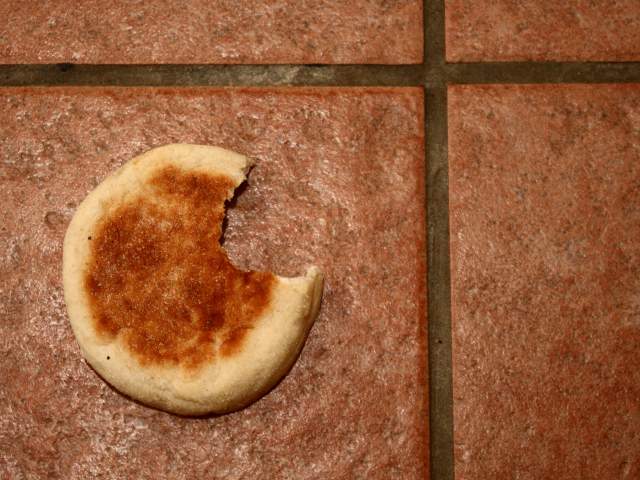
The Five Second Rule, or do you eat dropped food?

You know those times when you’ve just promised a biscuit to a four-year old, and then you accidentally scatter them all over the kitchen floor, leaving the four-year old with a look of pure horror and dismay on her face?

What do you do?

Normally, I’d just scoop the pile of broken biscuits up and dump them straight in the bin, but this time The Five Second Rule was invoked.

What on earth is the Five Second Rule, I asked?

The Five Second Rule, I was told (quite confidently, I thought), states that if a piece of dropped food rests on the floor for less than five seconds, it’s still OK to eat.

This is scientific FACT, apparently.

Some discussion followed about this supposed rule probably being a load of old rubbish, but The Invoker remained adamant that everybody knows about the Five Second Rule, and that it was only a biscuit anyway.

Asking around on Twitter and at work confirmed that there are plenty of people out there who’ve heard of the rule, although the time boundaries seem to be flexible depending on location, and many people seemed to think that it was probably incorrect, but followed it anyway. This, obviously, makes no sense at all.

It sound like an urban myth, and in my experience, when things sound like urban myths, they normally are.

It seems common sense to expect that food that comes into contact with an unclean surface would pick up traces of whatever made the surface unclean in the first place, and there’s been plenty of research done to prove just this.

More below…

Chana masala, or chickpea curry

Food & drink
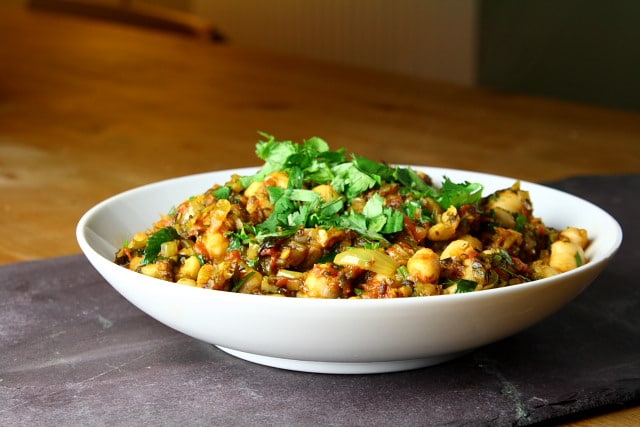
Chana masala, or chickpea curry

Indian cookery doesn’t have to be complicated, and it needn’t take a long time.

Here’s proof.

If you’re good at chopping things up, you could have this chickpea curry on the table in about twenty-five minutes, for under about £3 for four servings.

The building blocks of the curry go into the pan first.  Heat some vegetable oil in a large pan and add a teaspoon of cumin, and when it starts to hiss and pop, add a quarter teaspoon of turmeric, one and a half teaspoons of roughly ground coriander seeds and up to one and a half teaspoons of mild chilli powder.  My chilli powder is not mild at all, so I pared this back to a little under half a teaspoon, and on the second run through of this recipe, it was far too hot for some, so be careful.

Work quickly, stirring the spices around so that they don’t catch, then add a chopped red onion, four chopped cloves of garlic and a two and a half centimetre chunk of fresh ginger, finely chopped.

[continue reading…]