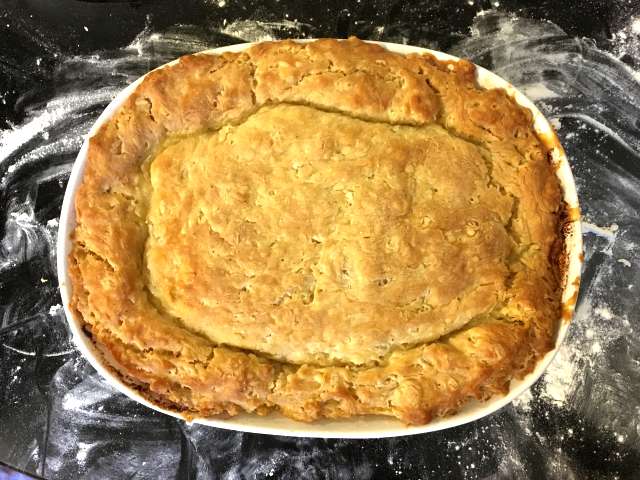
Slow cooked oxtail pie, with suet crust pastry

Food & drink
Slow cooked oxtail pie, with suet crust pastry

So, cold isn’t it?

All of a sudden, those rolled pieces of brisket and the big slabs of pork belly in the butcher’s window don’t seem like such a bad idea. Nor do the ox tails, hanging in braces on butcher’s hooks like some sort of skewered alien lifeforms.

Well, never one to shy away from the odder cuts …

The tail of a cow does a lot of work. It’s never still, a simple swatter whose main purpose is to swish backwards and forwards to keep its owner fly free and comfortable. It’s a cut of beef that’s worked hard, and it’s therefore tough. It’s very tough indeed, and it needs careful cooking to tenderise it – long, low, slow.

It must be braised in some form of liquid, the marrow from those plentiful bones melting into a rich and thick sauce. If that liquid is red wine, then so much the better. Add the Holy Trinity of vegetables – carrot, onion, celery – and you can see, smell, sense how this is going to shape up.

First thing’s first. You need an oxtail. Buy a whole one, and have the butcher chop it up for you. Seriously, this is why butchers have those massive cleavers. You aren’t going to get very far doing the chopping on your own, no matter how good your knives are … chopping up an ox tail is a brutal, inelegant job best left to the person with the biggest tool.

Don’t let the butcher fob you off with a load of skinny pieces from the end, either. Buy a whole tail and ask for the thick bits to be cut into two pieces. This is where the best meat and the best marrow is.

It’s possible to make a thoroughly decent stew or casserole with oxtail, but such a thing, good as it undoubtedly is, will in my book always feel like a bit of a let down, as if there’s a part missing.

It needs some pastry.

It’s destiny is to become a pie.
More…

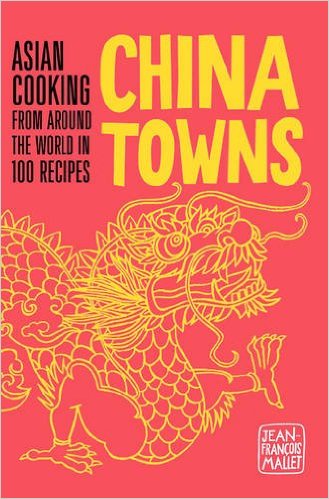
China Towns: Asian Cooking from around the World in 100 Recipes, by Jean-François Mallet

Books
China Towns: Asian Cooking from around the World in 100 Recipes, by Jean-François Mallet

I sometimes have to travel to London for work, and every once in a while, I find myself with an evening to kill and nobody to kill it with.

This, I relish, and I spend most of my time wandering around the streets, just watching things happen.

Often, I’ll walk around the West End and up Shaftesbury Avenue, turning into Gerrard Street, the main thoroughfare through London’s Chinatown.

That turn might as well be a right-hander into a different universe, so distinct is the look and feel of Gerrard Street, a concentrated microcosm of Chinese life and culture. Ducks hang in the windows of restaurants, gleaming red with soy, the street names are mirrored in Chinese, there’s a huge oriental arch.

Walking down that street, which I do slowly, relishing every step, is a wonderful experience, each restaurant bursting with people eating dim sum, Peking duck, noodles, the smells drifting across the street.

And then, as quickly and abruptly as it began, it ends, and I’m slapped with the brashness of Leicester Square or Piccadilly Circus. Straight back to earth, back to London.

It’s natural for people who migrate to want to live together and to carve out a piece of their own culture in their new home, and that brings a richness and diversity that we can all be proud of. These little enclaves, these Chinatowns that have sprung up in cities all around the world are important places for the Chinese who live in them, and give everybody else a glimpse into Chinese life, and more importantly, its food.

Chinese food travels well. It’s exotic, it’s different, far removed from the European canon of cuisine. It’s flavours are big and bold, but there’s subtlety and precision there too. Above all, it’s delicious.

Jean-François Mallet’s book China Towns: Asian Cooking from around the World in 100 Recipes is a tour of some of the most important Chinatowns around the world, a journey told through a hundred recipes and nine restaurants. It’s primarily a cook book, primarily a collection of recipes, but those recipes tell a story of migration, settlement, of working and living together in a new place, of forging a life.

More…

GEAR REVIEW: SuperFast Thermapen® 4 Cooks Thermometer

Kitchen gear
GEAR REVIEW: SuperFast Thermapen® 4 Cooks Thermometer

I’ve always taken gambles when it comes to testing the ‘doneness’ of things, and this sense of lottery normally reaches a tension-filled crescendo just before lunch on Christmas day, when I’m stood in front of an enormous turkey, out of the oven, wrapped in foil, rested and I start to wonder … is it cooked properly, or is this going to be the day that we remember forevermore as the day I poisoned my entire extended family?

I do the normal tests, stabbing the bird in the thickest part of the leg and studying the juices for any traces of blood, which is generally pretty inconclusive, and I’ve also tried my luck with one of those crappy £3 thermometers with a manual dial on the top, the ones where the needle never seems to get above the ‘rare lamb’ stage regardless of how long whatever the subject is has been cooking. I firmly believe that you could plunge a turkey into the heart of an erupting volcano for several hours, take a reading with one of those thermometers and be led to believe that it was still dangerously raw.

There has to be a better way, and I’ve discovered that better way! In September! Months ahead of D-Day, sorry, I mean Christmas Day!

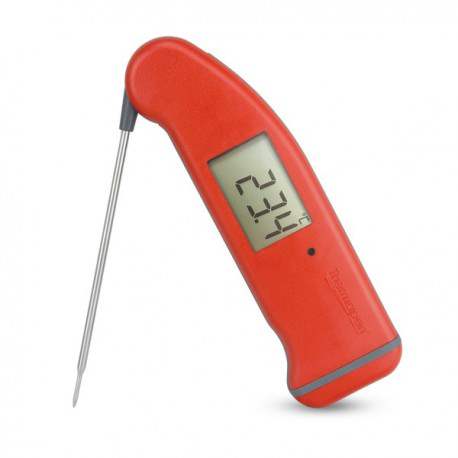
The Superfast Thermapen thermometer is exactly that – it’s a kitchen probe that works really quickly, and very, very accurately.

The most important attribute of any thermometer, and especially one that’s going to help you make decisions about whether something as potentially harmful as an undercooked chicken should be eaten or not, is accuracy. All Thermapen thermometers are hand calibrated before being shipped, and certified as such. The person who did the calibration even signs a certificate to say so.

More…

Sherry: A Modern Guide to the World’s Best-Kept Secret, by Talia Baiocchi

Books
Sherry: A Modern Guide to the Wine World’s Best-Kept Secret, with Cocktails and Recipes by Talia Baiocchi

A few years ago, we had dinner at a Spanish restaurant in Liverpool. It was a little disappointing, but the one thing I remember clearly was that I decided to follow the hints on the menu and ordered a glass of fino sherry instead of the usual wine.

It was a complete revelation – chilled, bone-dry, delicate and ethereal.

Everything I thought sherry wasn’t supposed to be, I suppose, raised as I had been surrounded by a million myths about sherry (sweet, old-fashioned, something for Grandma at Christmas, sticky, warm, etc, etc).

I couldn’t quite believe just how good that fino was. It was a little epiphany in a glass.

The way that people think about sherry is changing fast. That dusty and fusty image is dissipating rapidly as more people start to taste real sherry and not the approximations that nearly destroyed the drink’s reputation in the seventies and eighties.

The one thing that I think is important to understand right from the start is that sherry is not necessarily sweet.

In fact, most of it isn’t.

Broadly speaking, the styles of fino, manzanilla, amontillado, palo cortado and oloroso are dry, and pedro ximenez and moscatel are sweet. Some of the best finos are among the very driest wines produced anywhere in the world, so the ‘sweet and sticky’ label is largely unjustified, and the result of inferior blends created to cater for particular tastes – the stuff that nearly destroyed the style and took the industry with it.

So, there’s more to sherry than that dusty bottle rammed into the back of your parent’s kitchen cupboard. It’s a whole new world, and Talio Baiocchi’s book, Sherry: A Modern Guide to the Wine World’s Best-Kept Secret, with Cocktails and Recipes, is a superb introduction to it.

More…

Leeds Kirkgate Market vs. Mercado da Ribeira

Food politics
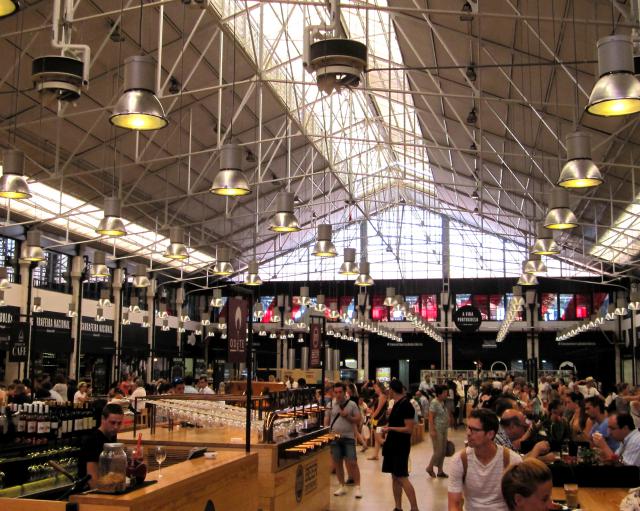
Mercardo da Ribeira, Lisbon, Portugal

I spend a lot in markets, in terms of both time and money.

A lunchtime trip to the fruit, veg, fish and meat stalls of Kirkgate Market in Leeds has become a weekly ritual, and I return to the office with one of those blue IKEA bags full of stuff.

My colleagues ask me what unspeakable things I’m hiding in the bottom of the communal fridge for the afternoon, having found out I’ve used the redundant salad drawer to temporarily confine a lobster for the afternoon once or twice.

People often ask me if there’s anything that’s still alive in my bag …

I’m very fond of Kirkgate Market. I have a little extended route to work that winds from the station, along The Calls and back up through the market, further than strictly necessary, in the name of general fitness, and I see the place waking up, the fishmongers shovelling ice, the butchers stacking up meat in their windows, the woman on the spice stall sorting out bundles of herbs.

I check every morning how good the bunches of parsley are looking and go back later if there’s been a fresh delivery.

It’s a great place, but not without its problems.

I wrote a piece a few years ago for the brilliant Culture Vulture about the way that I thought the market had lost its direction a little, and perhaps a bit of its soul, and I think that much of what I said then rings true today.

There’s some change in the air – a huge development right next door will land an upscale shopping centre and a John Lewis on the market’s doorstep, which is certainly going to shake things up, and there’s a fair amount of work being done on the market buildings and layout as well, which it’s fair to say is a bit of a mess, ranging from architecturally stunning Victorian buildings right through to constructions from the eighties that it would be kind to call ‘hangars’.

More…